USCIS Case Status Check & Tracking Guide, 2026


USCIS case status tracking is a critical process for millions navigating the U.S. immigration system. How can you efficiently check your application’s progress, and what do the various status updates actually mean? This comprehensive guide provides the best ways to monitor your case, interpret common notifications, and take action when needed. Understanding the difference between a standard processing timeline and a case outside normal processing times can save you significant stress. With updates as of 2026, we cover the official tools, expert tips, and procedural knowledge you need to stay informed from submission to final decision.
What Is the USCIS Case Status Online Tool and How Does It Work?
The USCIS Online Case Status Tool is the primary and most immediate resource for applicants. How can you use this system effectively? You need your unique receipt number, which begins with three letters (like IOE, MSC, LIN, SRC, or WAC) followed by 10 digits, found on your Form I-797C, Notice of Action. After entering this number on the USCIS website, the portal displays your current case status. What are the pros and cons of relying solely on this tool? The main advantage is real-time, official updates. However, the status descriptions are often generic and may not provide detailed reasons for delays or requests for evidence (RFE). For more nuanced tracking, creating a free USCIS online account is the best way to access detailed case history, receive electronic updates, and manage communications for multiple cases in one place.
How to Interpret Common USCIS Case Status Messages?
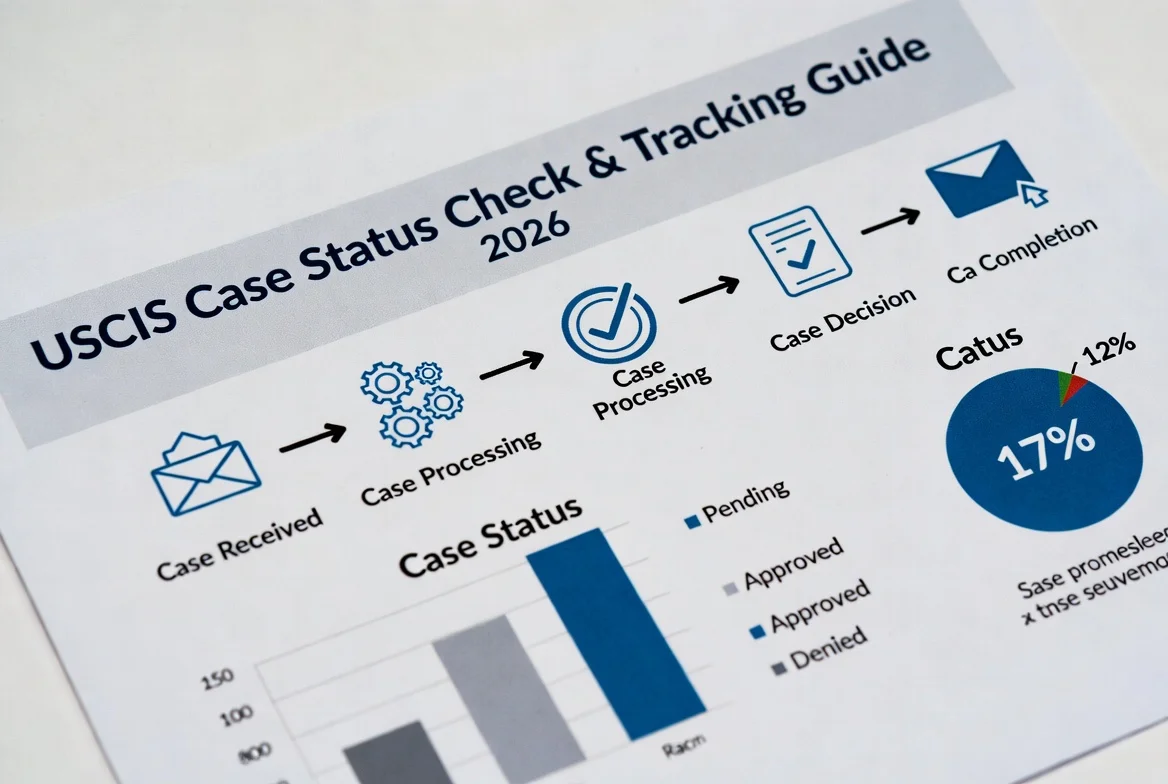
Understanding the terminology is key to managing expectations. What is the difference between “Case Was Received” and “Case Is Being Actively Reviewed”? The first confirms USCIS has physically received your application and entered it into their system. The second indicates an adjudicating officer has begun the substantive review of your file—this status can last from weeks to many months. Which statuses signal a need for action? “Request for Initial Evidence Was Sent” (RFE) or “Request for Additional Evidence Was Sent” (RFE) mean you must respond by the deadline with the requested documents to avoid denial. “Interview Was Scheduled” provides the date, time, and location for your mandatory in-person interview. “Case Was Approved” is the desired final outcome, while “Case Was Denied” explains the reasons for the unfavorable decision. How long do statuses typically last? Each case is unique, but you can compare your progress against published USCIS processing times for your specific form and service center.
What Are the Official USCIS Processing Times in 2026 and How to Use Them?
As of 2026, USCIS publishes updated processing times for each form type at different service centers. How can you check these times accurately? Visit the “Check Processing Times” page on the USCIS website, select your form (e.g., I-130, I-485, N-400, I-765), and select the service center handling your case (found on your receipt notice). This will show a historical range (e.g., “10.5 Months to 13.5 Months”). When should you submit a “Case Outside Normal Processing Time” inquiry? You can only do this if your receipt date is before the “Receipt date for a case inquiry” listed. If eligible, you can submit an e-Request online. What is the best way to understand these ranges? The lower end represents the time it took to complete 50% of cases, and the higher end represents 93% of cases. Your experience may fall anywhere within or even outside this range.
How to Create and Use a USCIS Online Account for Detailed Tracking?
A USCIS online account offers far more functionality than the basic case status check. How do you set one up? Visit the USCIS account access page and follow the steps to verify your identity and link your receipt numbers. What are the key benefits of having an account?
-
Document Access: View and download PDF copies of notices USCIS has mailed to you.
-
Secure Messaging: Send non-urgent, case-specific inquiries directly to USCIS.
-
Online Response to RFEs: For certain forms, you can upload evidence directly through your account.
-
Case History: See a detailed log of every action taken on your case.
-
Appointment Management: For some applications, you can reschedule biometrics appointments.
This is arguably the top tool for proactive case management in 2026.
When and How to Contact USCIS About Your Case Status?
Knowing the appropriate channel is crucial. How many ways are there to contact USCIS about a case?
-
Online Inquiry (e-Request): For cases outside normal processing times or for certain non-delivery of notices.
-
Phone (USCIS Contact Center): Call 1-800-375-5283. Use the automated system or say “infopass” to speak with a live agent. Have your receipt number and personal details ready.
-
Emma Live Chat: Use the virtual assistant “Emma” on the USCIS website and type “live agent” to connect to a representative.
-
Appointment (InfoPass): Schedule an in-person appointment at a local field office for complex issues that cannot be resolved by phone.
What should you have prepared before contacting them? Your A-Number, receipt number, full name, date of birth, and a clear, concise question.
What Are the Most Common Reasons for USCIS Case Delays in 2026?
Delays can be frustrating. What are the top factors contributing to longer processing times?
-
Background and Security Checks: These mandatory checks can stall a case if there are hits or complexities.
-
Request for Evidence (RFE): The clock often stops from when the RFE is issued until USCIS receives your response.
-
Application Volume: High volumes for particular visa categories or at specific service centers create backlogs.
-
Incomplete or Inaccurate Forms: Errors trigger delays for correction or requests for additional information.
-
Case Complexity: Unusual circumstances require additional levels of review.
How can you potentially avoid delays? File complete, accurate applications, respond to RFEs promptly and thoroughly, and ensure all supporting documents are included.
Table: Guide to USCIS Case Status Terminology & Action Steps
| Case Status Message | What It Typically Means | Recommended Action |
|---|---|---|
| Case Was Received | Application is logged in the system. | Wait. Confirm mailing address is correct in your online account. |
| Case Is Being Actively Reviewed By USCIS | Adjudication has begun. Processing time varies. | Wait. This is a normal, often lengthy stage. |
| Request for Evidence (RFE) Sent | USCIS needs more information to make a decision. | Critically Important: Respond before the deadline. Upload or mail evidence. |
| Response To USCIS’ Request For Evidence Was Received | Your RFE response is under review. | Wait. Decision usually follows within 60 days, but can vary. |
| Interview Was Scheduled | In-person interview date is set. Notice mailed. | Check your online account for notice PDF. Prepare thoroughly for interview. |
| Case Was Approved | Application granted. Card/document is being produced. | Celebrate! Await approval notice and card/document in mail. |
| Case Was Denied | Application not approved. Notice explains reasons. | Review denial reasons. You may appeal (Form I-290B) or re-file if eligible. |
| Card/Document Was Produced | Physical evidence (Green Card, EAD) has been manufactured. | Await mailing. Track the USPS delivery via your online account if available. |
Frequently Asked Questions (FAQs)
1. How often does my USCIS case status update?
Statuses are updated in real-time when a USCIS officer takes a major action on your case (e.g., sends an RFE, schedules an interview, approves). There is no daily or weekly update—the date shown is the date the action occurred. Long periods without an update are normal during the “Actively Reviewed” phase.
2. My case status says ‘Case Was Received’ for months. Is this normal?
Yes, this is very common. “Case Was Received” can remain for the entire initial phase until an officer picks up the file. You should compare your receipt date to the current USCIS processing times for your specific form to see if it is within the normal range. Only if it is outside that range should you consider an inquiry.
3. What should I do if I lose my USCIS receipt number?
How can you recover a lost receipt number? Contact the USCIS Contact Center at 1-800-375-5283. You will need to verify your identity (provide name, date of birth, A-Number). If you filed through an attorney, they will have a copy. If you filed by mail, check your bank statement for the cashed check; the receipt number is often printed on the back.
4. What does it mean if my case status says ‘Case Transferred To Another Office’?
This means your physical file has been moved from one USCIS service center or field office to another to balance workloads or for specialized processing. The new office will have jurisdiction. You should receive a transfer notice in the mail. Update your processing time checks to reflect the new office.
5. Is ‘Case Is Being Actively Reviewed’ a good sign?
It is a neutral and necessary sign. It means your file is with an adjudications officer and is progressing through the system. It does not indicate a likely approval or denial. The status could change to an RFE, an interview notice, or a decision.
6. How long after ‘New Card Is Being Produced’ do I receive my Green Card or EAD?
Typically, you will receive the card in the mail within 7-14 days. Your online case status will usually update to “Card Was Mailed To Me” with a USPS tracking number. You can often see this tracking number in your USCIS online account.
7. Can I speed up my USCIS case processing?
Generally, no. USCIS processes cases in the order they are received, with some exceptions. You may be eligible to request expedited processing if you meet specific criteria (severe financial loss, humanitarian reasons, etc.). You must demonstrate compelling evidence through a service request or via your online account.
Disclaimer: The information provided in this guide is for general informational purposes only and does not constitute legal advice. Immigration law and USCIS procedures are complex and subject to change. For specific guidance on your individual case, always consult with a qualified immigration attorney or an accredited representative.
Keywords: USCIS case status, check my case status USCIS, USCIS processing times 2026, USCIS online account, USCIS receipt number, case is being actively reviewed, RFE USCIS, USCIS case tracker, immigration case status, how to contact USCIS