Minimum Wage in the United States by State

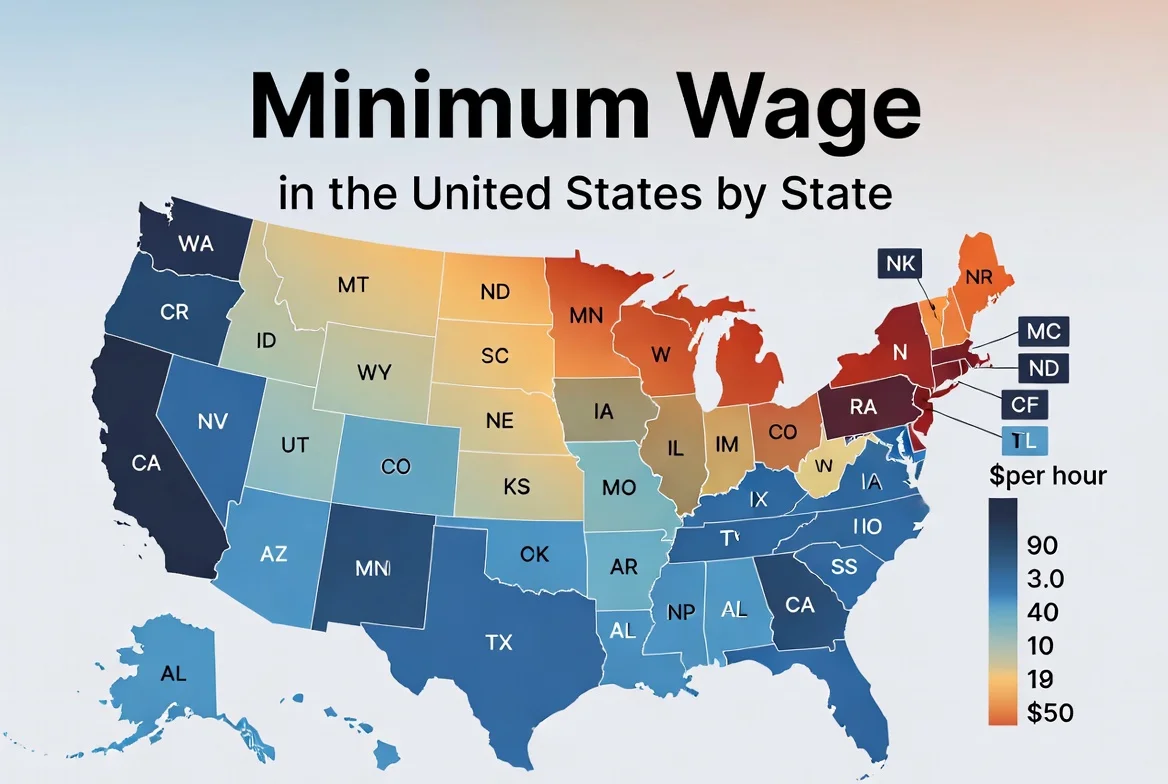

Minimum wage laws in the United States create a complex patchwork of regulations where state, local, and federal rates intersect. As of 2026, what is the current minimum wage in your state, and how does it compare to the national baseline and cost of living? This definitive guide provides a state-by-state breakdown, explains the key factors influencing wage floors, and answers critical questions about tipped employees, exemptions, and future increases. Understanding these differences is crucial for both employers ensuring compliance and employees advocating for their rights in a dynamic economic landscape.
What is the Federal Minimum Wage in 2026 and How Does It Work?
The federal minimum wage serves as the national floor, but its relevance has diminished over time. How much is the federal minimum wage in 2026? As of this year, it remains $7.25 per hour, a rate that has not increased since July 2009. Which employees are covered by this rate? It applies to workers engaged in interstate commerce, employed by large enterprises, or in federal government occupations, but only in states without a higher minimum wage. The difference between the federal rate and state rates is significant; most states and many cities have implemented higher wages. Why has the federal rate stayed stagnant? Political gridlock and debates over the impact on small businesses have prevented legislative updates, shifting the primary responsibility for wage increases to state and local governments.
How to Find the Precise Minimum Wage for Your State and City?
With over 50 different state rates and numerous local ordinances, how can you determine the exact minimum wage that applies to you? The rule is that employees are entitled to the highest applicable rate—federal, state, or local. What is the best way to verify the current wage? First, check your state’s department of labor website for the official rate. Second, investigate if your city or county has a separate, higher “local minimum wage.” Major cities like Seattle, San Francisco, and New York often have rates significantly above their state’s minimum. When do these rates typically change? Many states and cities schedule annual increases based on inflation indices or pre-set schedules, often occurring on January 1st or July 1st. Employers are required to post the official minimum wage notice in a conspicuous workplace location.
Which States Have the Highest and Lowest Minimum Wages in 2026?
The disparity in wage floors across the country is substantial. What are the top 5 states with the highest minimum wages in 2026?
-
Washington: $17.28 per hour (adjusted annually for inflation).
-
California: $16.00 per hour (with higher rates in many cities like San Francisco).
-
New York: $15.00 per hour statewide (with a higher rate of $16.00 in New York City).
-
Massachusetts: $15.00 per hour.
-
New Jersey: $15.13 per hour.
Conversely, which states have the lowest minimum wages? Several states either adhere to the federal $7.25 rate or have set rates only slightly above it. These include Georgia, Wyoming, and Alabama, which all use the $7.25 federal floor. The difference between the highest and lowest state minimum wage now exceeds $10 per hour, highlighting vast regional differences in economic policy and cost of living.
What Are the Rules for Tipped Employees and Overtime Pay?
Minimum wage calculations become more complex for tipped workers and overtime. How much must employers pay tipped employees? Under federal law, employers can claim a “tip credit” and pay a direct cash wage as low as $2.13 per hour, provided the employee’s tips bring their total earnings to at least the full federal minimum wage of $7.25. However, many states have eliminated or reduced this credit, requiring employers to pay the full state minimum wage before tips. For example, in California and Washington, tipped employees receive the full state minimum wage plus their tips.
When is overtime pay required? The Fair Labor Standards Act (FLSA) mandates overtime pay at a rate of 1.5 times the employee’s regular rate for all hours worked beyond 40 in a single workweek. Should you expect overtime pay if you are on salary? Not necessarily; salaried employees must meet specific duties tests to be classified as “exempt” from overtime. Misclassification is a common issue, and understanding these rules is one of the best ways to ensure proper compensation.
How Do Future Scheduled Increases and Cost of Living Adjustments Work?
Many states have built automatic increases into their wage laws. How often do these increases occur? They are typically annual. What is the mechanism behind them? There are two primary models: pre-legislated step increases (e.g., “increase to $15.50 on January 1, 2027”) and automatic adjustments tied to a consumer price index (CPI) to account for inflation. States like Washington, Colorado, and Arizona use CPI-based models. Is it worth tracking these schedules? Absolutely, for both payroll planning and personal financial forecasting. Employers must update their systems, and employees can anticipate wage growth.
What Are the Key Exemptions to Minimum Wage Laws?
Not all workers are covered by minimum wage statutes. Which jobs are commonly exempt? The FLSA and state laws exempt categories such as:
-
Executive, Administrative, and Professional employees (the “white-collar” exemptions).
-
Outside Salespersons.
-
Certain seasonal and recreational employees.
-
Some student-learners and workers with disabilities.
-
Tipped employees (under the specific credit system).
How can you determine if an exemption applies? Exemptions are narrowly defined, and the employer bears the burden of proof. Simply paying a salary does not automatically make an employee exempt; their specific job duties must meet the legal criteria. Consulting official resources from the U.S. Department of Labor is the best way to clarify status.
Table: 2026 Minimum Wage Overview by State Category
| State Category | Representative States | 2026 Wage Range (per hour) | Key Characteristic |
|---|---|---|---|
| High-Cost / High-Wage States | WA, CA, NY, MA | $15.00 – $17.28 | Rates at or above $15, often with local ordinances and CPI adjustments. |
| Middle-Tier States | AZ, CO, ME, VT | $13.00 – $14.50 | Rates between federal and $15, many with scheduled future increases. |
| Federal Floor States | GA, WY, AL, TN | $7.25 | No state minimum wage law; the federal $7.25 rate applies. |
| State-Specific Rates | TX, PA, OH, VA | ~$9.00 – $12.00 | Rates set above federal but below $15, with varying update mechanisms. |
Frequently Asked Questions (FAQs)
1. What is the minimum wage in my state right now?
You must check your specific state’s labor department website for the official, up-to-date rate as of 2026, as many rates change annually. Remember to also check for a higher local city or county ordinance that may apply to your workplace.
2. Can my state’s minimum wage be lower than the federal minimum wage?
No. The Fair Labor Standards Act (FLSA) sets the absolute floor. If a state’s minimum wage is lower than $7.25, the federal rate applies. Conversely, if the state or local rate is higher, that higher rate is legally binding.
3. How is the minimum wage for tipped workers calculated?
Federal law allows a tip credit, but state laws vary dramatically. In some states, employers can pay a lower direct wage (e.g., $2.13) if tips cover the difference. In others, tipped workers earn the full state minimum wage before tips. You must be paid the difference if tips plus the lower wage do not meet the applicable minimum wage for all hours worked.
4. Are there plans to increase the federal minimum wage?
As of 2026, legislative proposals to raise the federal minimum wage to $15 or more remain stalled in Congress. The primary action continues at the state and municipal levels, where increases are more frequently enacted.
5. What should I do if I am being paid less than the minimum wage?
First, clarify the correct applicable rate for your location and job classification. If a violation is suspected, you can file a wage claim with your state’s labor commission or the federal Wage and Hour Division. It is illegal for an employer to retaliate against you for filing a complaint.
6. Does the minimum wage apply to all workers, including teenagers?
Generally, yes. There are very limited subminimum wage provisions for youth (under 20) during their first 90 consecutive calendar days of employment, full-time students, and student-learners, but these are narrow exceptions under both federal and state laws.
Disclaimer: The minimum wage information provided in this article is for general informational purposes only as of 2026. Wage laws are subject to frequent change through legislation, ballot initiatives, and inflation adjustments. The user is solely responsible for verifying the current, official minimum wage rates with their state’s Department of Labor or the U.S. Department of Labor before making any decisions.
Keywords: minimum wage by state 2026, federal minimum wage, state labor laws, tipped employee wages, overtime pay rules, wage theft, department of labor, cost of living adjustment, FLSA, employee rights