
Loan Officer Average Salary in USA, 2026

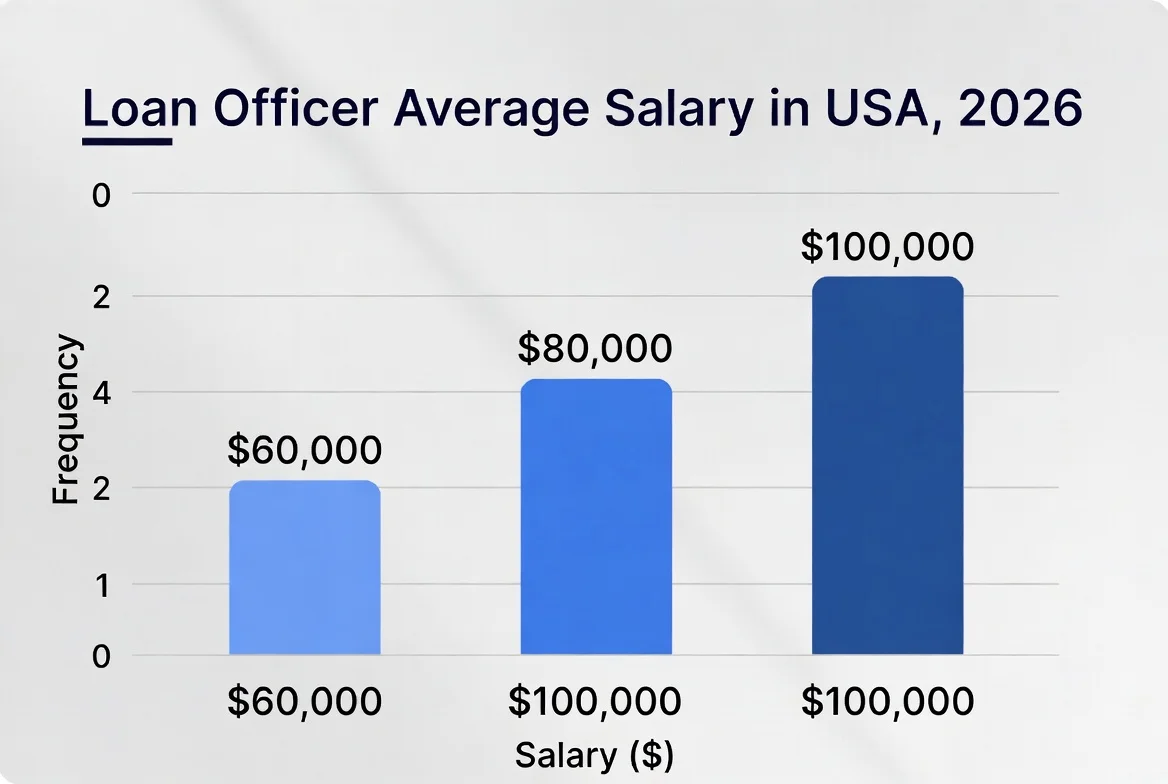

Loan Officer salaries in the United States showcase a career path with a significant earnings range, heavily influenced by experience, commission structures, and geographic location. As of 2026, what is the true earning potential for a Loan Officer, and how can professionals in this field maximize their income? This comprehensive analysis breaks down the national and state-level salary data, explores the key factors affecting pay, and provides actionable insights for both aspiring and experienced loan officers. Understanding these dynamics is crucial for navigating a career in this competitive and relationship-driven sector of the financial industry.
What Is the Average Salary for a Loan Officer in the United States?
How much can a Loan Officer realistically expect to earn annually? The national average salary for a Loan Officer in 2026 is $39,822 per year, which translates to approximately $20.15 per hour. However, this figure represents a median that encompasses a vast spectrum. Where does the salary range typically fall? Entry-level positions often start around $35,270 per year, while the top 10% of most experienced and successful workers can make upwards of $109,787 per year. This wide disparity highlights that a loan officer’s compensation is rarely just a base salary. What is the primary reason for this range? The majority of loan officer positions include a commission or bonus structure tied to loan volume and value, making total compensation highly variable and performance-based.
How Does Loan Officer Salary Vary by State?
Which states offer the highest and lowest wages for Loan Officers? Geographic location plays a critical role in determining earning potential due to cost of living, state licensing regulations, and local real estate market vitality.
-
Top-Paying States: Alaska leads with an average of $53,064, followed by New York ($44,916), Vermont ($44,720), Maryland ($44,566), and Montana ($43,680). These higher averages often correlate with strong housing markets or specialized financial hubs.
-
Lower-Paying States: States like Mississippi ($29,120), Kentucky ($30,285), and Michigan ($30,630) report averages below the national median, reflecting different economic conditions and market pressures.
How much of a difference can location make? The gap between the highest and lowest average state salaries is nearly $24,000, underscoring the importance of market selection for maximizing income.
What Are the Key Factors That Influence a Loan Officer’s Earnings?
A loan officer’s paycheck is not a simple calculation. What are the main drivers behind the numbers? Several interconnected factors determine total compensation.
-
Compensation Structure: This is the most significant factor. What is the difference between a pure commission role and a salary-plus-bonus model? Pure commission offers uncapped earning potential but carries higher income risk. A base salary plus bonus provides more stability but may have a lower ceiling.
-
Experience and Performance: Naturally, experienced officers with a proven track record and a robust client network command higher commissions and bonuses. How fast can earnings grow? The jump from entry-level to experienced can be dramatic, as seen in the $70,000+ range between the low and high ends of the scale.
-
Employer Type: Who pays more—large national banks, local credit unions, or independent mortgage brokers? Large banks may offer stronger benefits and marketing support, while brokers often provide higher commission percentages. Non-depository lenders focused solely on mortgages might offer more aggressive compensation plans.
-
Loan Volume and Product Type: The number and size of loans closed are direct inputs into commission. Which loan types are more lucrative? Jumbo loans or commercial mortgages typically yield higher fees than standard FHA/VA loans.
What Is the Career Path and Related Salary for a Loan Officer?
Understanding adjacent roles clarifies the financial landscape. How do related positions compare in salary?
| Job Title | Average Salary (2026) | Primary Focus | Key Difference from Loan Officer |
|---|---|---|---|
| Underwriter | $105,000 | Risk assessment & loan approval | Analytical, backend role; typically salaried without commission. |
| Mortgage Consultant | $100,000 | High-level client advisory & complex deals | Often similar to senior LO, but may focus on high-net-worth individuals. |
| Branch Manager | $93,284 | Team leadership & branch P&L | Management role overseeing multiple LOs; includes base + team-override bonuses. |
| Credit Analyst | $90,000 | Analyzing borrower creditworthiness | Support role; less sales-focused, more data-driven. |
| Mortgage Loan Originator (MLO) | $68,954 | Originating mortgage loans (synonymous with LO) | Title emphasizes the licensed originator function; compensation is similar. |
| Loan Specialist | $62,352 | Processing & supporting loan applications | Administrative/operational role with little to no sales commission. |
Is it worth pursuing a managerial path? For loan officers seeking less variable income and more stability, moving into underwriting or branch management can be a lucrative career progression, though it moves away from direct sales.
How Can a Loan Officer Increase Their Salary and Earning Potential?
For professionals in this field, growth is intentional. What are the best ways to boost your annual income significantly?
-
Develop a Niche Specialization: Which markets are underserved? Becoming an expert in a specific loan type (e.g., VA loans, construction loans, or loans for self-employed borrowers) can reduce competition and allow you to charge a premium for your expertise.
-
Build a Robust Referral Network: How many referrals does a top performer get? Consistently generating business from real estate agents, financial planners, and past clients is the most effective way to ensure a steady pipeline without relying solely on marketing spend.
-
Master Technology and CRM Tools: Utilizing Customer Relationship Management (CRM) software efficiently can automate follow-ups, track leads, and improve conversion rates, directly impacting closed loan volume.
-
Obtain Advanced Certifications: While an NMLS license is mandatory, which certifications add credibility? Designations like the Certified Mortgage Banker (CMB) can enhance your reputation and justify working with higher-value clients.
-
Focus on Customer Service and Repeat Business: Providing an exceptional, transparent experience leads to repeat clients and referrals, which are the most cost-effective sources of new business.
What Are the Pros and Cons of a Career as a Loan Officer?
Should you become a Loan Officer? Weighing the benefits and challenges is essential.
-
Pros: Uncapped Earning Potential: Your income is directly tied to your effort and skill. Flexibility: Many roles offer remote work or flexible hours. Entrepreneurial Feel: You are essentially running your own book of business within a company. Helping Clients Achieve Goals: The role is centered on facilitating major life purchases like homes.
-
Cons: Income Volatility: Earnings can fluctuate with interest rates and the housing market cycle. High-Pressure Environment: Meeting sales targets and managing complex transactions can be stressful. Cyclical Industry: Susceptible to economic downturns and rising interest rates. Heavy Compliance Burden: Requires strict adherence to extensive federal and state regulations.
What Is the Job Outlook and Future for Loan Officers in 2026?
How will the role evolve in the coming years? The demand for loan officers is expected to be steady, but the nature of the job is changing. What is the impact of technology? Automation is handling more of the application processing, shifting the loan officer’s role further towards high-touch client consultation, complex case resolution, and relationship management. Success will increasingly depend on soft skills, advisory capabilities, and the ability to navigate a digitally facilitated process.
Frequently Asked Questions (FAQs)
1. Why is the average Loan Officer salary ($39,822) lower than expected?
This average often reflects a large number of entry-level positions, part-time roles, or those with a small base salary and high commission potential. It includes all reported wages, so it may not fully capture the total compensation (commission + bonus) of established, full-time loan officers, which can be significantly higher.
2. How much does a Loan Officer make in commission?
Commission structures vary widely. A common model is 1% of the loan amount (100 basis points). On a $300,000 mortgage, that would be $3,000 in commission. Top performers may earn 1.25% or more, while entry-level officers might start with a lower split (e.g., 50 basis points or 0.5%).
3. What is the difference between a Loan Officer and a Mortgage Loan Originator (MLO)?
In practical terms, they are often the same. “Mortgage Loan Originator” is the formal legal term used in licensing (NMLS). “Loan Officer” is a broader title that can also include those working on consumer, auto, or commercial loans, though in the housing context, they are used interchangeably.
4. Do Loan Officers need a degree?
A bachelor’s degree in finance, business, or a related field is preferred by many employers but is not always a strict requirement. The mandatory requirement is obtaining a state license and a National Mortgage Licensing System (NMLS) unique identifier, which involves pre-licensing education, passing an exam, and a background check.
5. Is being a Loan Officer a good career in 2026?
It can be an excellent career for self-motivated, sales-oriented individuals with strong interpersonal skills. While the market faces interest rate challenges, there is always a need for financing. The role offers high rewards for those who can build a strong network and provide exceptional client service.
6. What skills are most important for a high-earning Loan Officer?
Beyond financial knowledge, the top skills are: sales and negotiation prowess, exceptional communication and customer service, detailed-oriented processing ability, resilience in the face of rejection, and proactive networking.
Disclaimer: The salary data and career information presented in this article are based on aggregated 2026 market surveys and are intended for general informational purposes only. Actual compensation for Loan Officers varies drastically based on individual performance, commission structure, employer, geographic location, and prevailing economic conditions. This information should not be considered a guarantee or promise of specific earnings.
Keywords: loan officer salary, mortgage loan officer salary 2026, how much does a loan officer make, loan officer commission, loan officer jobs, mortgage loan originator salary, average salary USA, finance jobs, loan officer career path, loan officer requirements