
Investment Advisor Salary in the USA, 2026

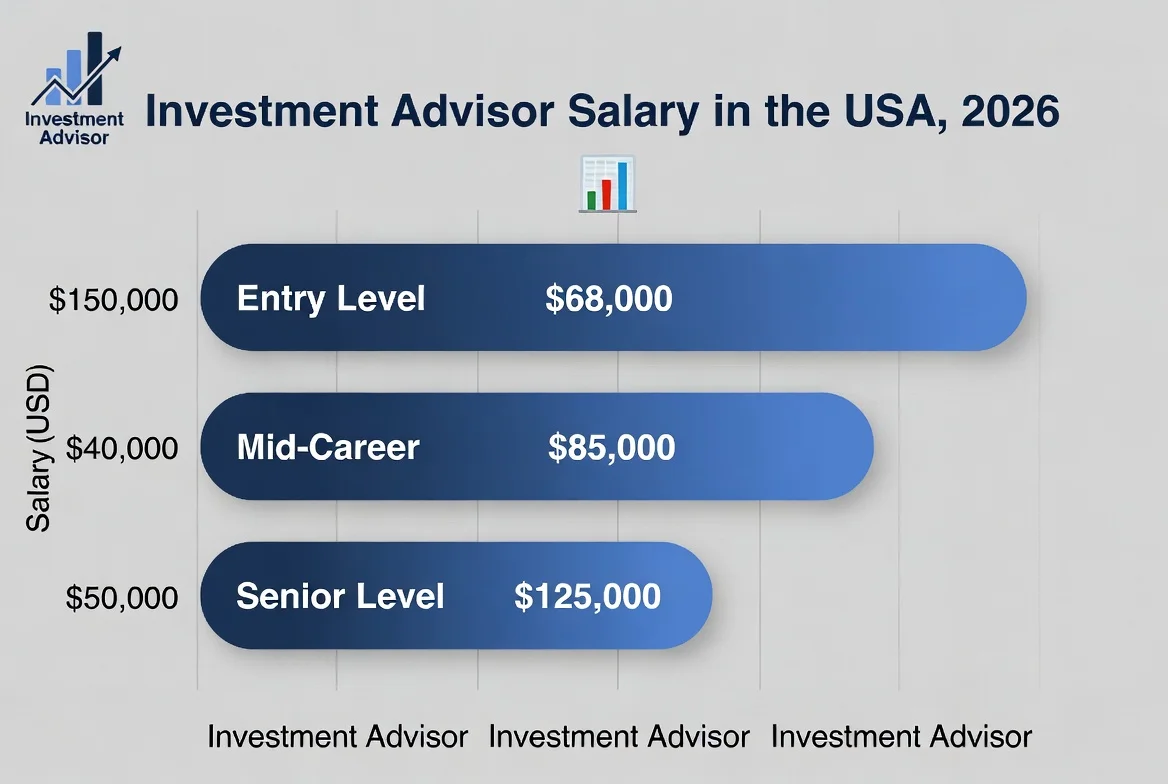

Investment Advisor salaries in the United States present a complex picture, heavily influenced by compensation structure, experience, and assets under management (AUM). As of 2026, what is the true earning potential for professionals guiding client portfolios, and how can one navigate the wide disparity between entry-level and top-tier incomes? This definitive analysis breaks down the national averages, state-by-state variations, and the key factors that determine whether an advisor earns a modest salary or a significant high-net-worth income.
What Is the National Average Salary for an Investment Advisor in 2026?
Why is there such a broad range reported for investment advisor salaries? The difference between base salary and total compensation is fundamental in this field. The national average salary is $50,168 per year, which translates to approximately $25.39 per hour. However, this median figure masks a vast spectrum. How much can entry-level professionals expect? Starting positions often begin around $37,440 per year, typically comprising a higher proportion of base salary as advisors build their book of business. Conversely, how high can earnings go? The most experienced and successful advisors, especially those with substantial AUM in major financial hubs, can make up to $123,003 per year or more, with a significant portion coming from commissions and bonuses. This wide range is one of the top characteristics of the profession.
Which States Pay the Highest Salaries for Investment Advisors?
Geographic location is a primary driver of salary differentials. Where should an advisor consider relocating to maximize income potential? The data for 2026 shows a clear concentration of higher wages in the Northeast and specific financial centers.
The top 5 highest-paying states are:
-
Massachusetts: $101,160
-
New York: $99,539
-
New Jersey: $90,630
-
Connecticut: $90,000
-
Virginia: $85,370
What is the best way to understand this geographic spread? High salaries in states like Massachusetts and New York correlate directly with the density of high-net-worth individuals, major financial firm headquarters (e.g., Boston’s asset management sector, Wall Street), and a higher cost of living. The presence of niche financial hubs, like those in Virginia near Washington D.C., also pushes averages upward. How far does the disparity go? Advisors in the lowest-paying state, Mississippi ($35,100), earn nearly one-third of those in top states, highlighting the importance of market selection.
What Are the Key Factors Influencing an Investment Advisor’s Earnings?
Beyond location, several variables critically impact income. Which factors are within an advisor’s control to improve their earning trajectory?
-
Compensation Structure: The difference between fee-only and commission-based models is profound. Fee-only advisors typically earn a percentage of AUM (e.g., 1%), leading to scalable income. Commission-based earnings are tied to product sales and can be more volatile but offer high short-term upside.
-
Experience and Credentials: How much more can a certified professional earn? Advisors with designations like CFP® (Certified Financial Planner) or CFA® (Chartered Financial Analyst) often command higher fees and salaries. Experience directly correlates with a larger, more stable client book.
-
Assets Under Management (AUM): This is the most direct lever. What is the typical AUM fee? While it varies, 0.5% to 1.5% annually is common. Therefore, an advisor managing $50 million in AUM could generate $250,000 to $750,000 in annual revenue for their firm, a portion of which comprises their compensation.
-
Firm Type and Size: Working for a large wirehouse (e.g., Morgan Stanley) often provides strong starting salaries and resources but may cap upside. Independent Registered Investment Advisors (RIAs) might offer a higher payout percentage but require more entrepreneurial effort.
How Does the Salary Compare to Related Financial Roles?
Understanding the competitive landscape is crucial. What are the pros and cons of being an Investment Advisor versus a similar role?
| Related Job Title | Average Salary (2026) | Primary Focus | Key Differentiator |
|---|---|---|---|
| Portfolio Manager | $94,534 | Direct management of investment funds and strategies. | More analytical/backend focused, less client-facing sales. |
| Financial Consultant | $85,000 | Holistic financial planning, often at a broader retail level. | May be a similar role but title varies by firm; scope can be wider. |
| Financial Advisor | $55,793 | General term often used interchangeably; can include insurance sales. | May have a lower barrier to entry and a stronger sales component. |
| Relationship Manager | $93,284 | Managing high-value client relationships within private banking. | Often serves ultra-high-net-worth clients within a bank structure. |
| Personal Banker | $49,733 | Providing standard banking products and services to retail clients. | Much more transactional, with limited investment authority. |
The table shows that while the Investment Advisor title has a lower median than some specialized roles, its high-end potential is extremely competitive, especially when tied to performance.
What Is the Career Path and Growth Potential for an Investment Advisor?
How long does it take to reach a high income level in this career? The path is typically a multi-stage journey. The first 1-3 years are often a building phase, with a focus on acquiring licenses (Series 7, 66) and developing a client base, supported by a modest salary. Years 3-7 see income growth as AUM compounds and referral networks activate. By year 10 and beyond, successful advisors with a solid, recurring-revenue book can achieve the top percentiles of earnings. Is it worth the initial grind? For individuals with strong interpersonal skills, ethical standards, and business development acumen, the long-term financial and professional rewards can be substantial. The best way to accelerate growth is through specialization (e.g., retirement planning for doctors, ESG investing) and obtaining advanced credentials.
What Are the Tax Implications on the Average Salary?
When evaluating an offer, how much would I earn after taxes? On the national average salary of $50,168, the take-home pay varies significantly by state due to income tax rates. For example, an advisor earning this amount in Texas (no state income tax) will retain more than one in New York or California. It is critical to calculate net income using a reliable paycheck calculator that accounts for federal, state, and local taxes, as well as Social Security and Medicare contributions. This net figure is the true measure of disposable income.
Frequently Asked Questions (FAQs)
1. What is the difference between a Financial Advisor and an Investment Advisor?
While often used interchangeably, an Investment Advisor is specifically registered with the SEC or a state agency to provide advice on securities for a fee. A Financial Advisor is a broader term that can include professionals who also sell insurance or commission-based products without a fiduciary duty. The title “Investment Advisor” implies a more focused, often fee-based approach to portfolio management.
2. How much of an Investment Advisor’s salary is typically base pay vs. bonus?
This varies widely. Entry-level roles at large firms may be 60-80% base salary. For established advisors, the ratio often flips, with 70% or more of total compensation coming from performance-based bonuses, commissions, and AUM-based fees. This makes income potential high but also variable.
3. Are the highest salaries only in New York City?
No. While New York is a major hub, the 2026 data shows that Massachusetts has the highest average. Other high-paying areas include financial centers in New Jersey, Connecticut, and Virginia. Major cities like Chicago (IL), Charlotte (NC), and San Francisco (CA) also offer very strong earning potential within their respective states.
4. What skills are most critical to increasing an Investment Advisor’s salary?
Beyond financial expertise, the top skills are business development and client relationship management. The ability to consistently attract and retain clients directly drives AUM growth. Strong communication, trustworthiness, and niche specialization are also highly valuable for justifying premium fees.
5. Is the job market for Investment Advisors growing?
Yes. The U.S. Bureau of Labor Statistics projects growth for personal financial advisors (a closely related category) as the population ages and retirement planning complexity increases. The demand for fiduciary, advice-based relationships over transactional sales is a strong trend favoring qualified Investment Advisors.
6. How do I negotiate a higher salary as an Investment Advisor?
Focus on your track record and business pipeline. What is the best way to negotiate? Present concrete metrics: your current AUM, historical growth rates, client retention percentage, and a realistic projection of the assets you can bring to the new firm. Demonstrating immediate revenue potential is far more powerful than negotiating on base salary alone.
Disclaimer: The salary data, averages, and state figures presented in this article are based on aggregated market sources and are for informational purposes only as of 2026. Actual compensation for an Investment Advisor can vary dramatically based on individual performance, specific employer, exact location within a state, compensation structure, and market conditions. This information should not be used as a sole source for financial or career decisions.
Keywords: Investment Advisor salary, average salary 2026, financial advisor income, AUM compensation, highest paying finance jobs, wealth management career, fee-only advisor, commission based salary, state salary comparison