How to Open a Bank Account Without an SSN

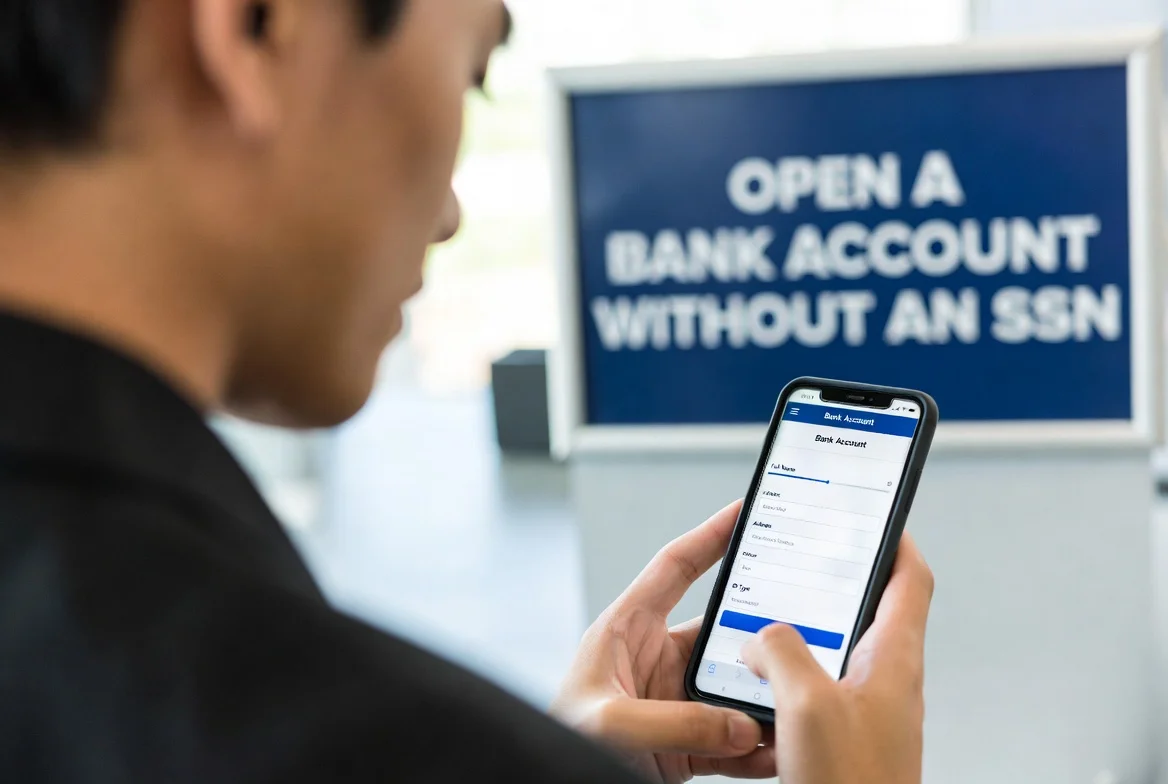

Opening a bank account without a Social Security Number (SSN) is a common challenge for non-residents, international students, and some immigrants. Is it possible, and what is the best way to navigate the U.S. banking system using alternative forms of identification? This definitive guide provides a clear roadmap, outlining the legal requirements, specific bank policies, and step-by-step processes for successfully establishing a banking relationship without an SSN.
What Are the Legal Requirements for Opening a Bank Account in the US?
Why do banks typically request a Social Security Number, and what are the legal alternatives? The primary reason banks ask for an SSN is to comply with the Customer Identification Program (CIP) under the USA PATRIOT Act, which requires them to verify the identity of anyone opening an account. What is the difference between an SSN and an Individual Taxpayer Identification Number (ITIN)? An SSN is issued to U.S. citizens and authorized residents for work and benefits, while an ITIN is a tax-processing number issued by the IRS to individuals who are required to have a U.S. taxpayer ID but are not eligible for an SSN.
Which documents can be used instead of an SSN? The most common and widely accepted alternative is an ITIN. Other acceptable forms of identification often include a valid passport, a foreign national ID card, and proof of U.S. address. The best way to proceed is to contact banks directly to confirm their specific policy, as requirements can vary significantly between institutions.
How to Apply for an ITIN to Use for Banking?
If you do not have and are not eligible for an SSN, obtaining an ITIN is a crucial first step. How can you get an ITIN, and how long does the process take?
You must complete IRS Form W-7, “Application for IRS Individual Taxpayer Identification Number.” What should you include with the form? The IRS requires original documents or certified copies from the issuing agency to prove your identity and foreign status, such as your passport. You must also include a completed U.S. federal tax return (e.g., Form 1040-NR) with the W-7, as the ITIN is for tax purposes.
How long does it take to receive an ITIN? Processing can take approximately 7 to 11 weeks if you apply by mail. There is no fee to apply for an ITIN directly from the IRS. Once you receive your ITIN (a 9-digit number formatted like an SSN), you can present it to banks that accept it for account opening. This is one of the top strategies for accessing financial services.
Which Major US Banks Allow You to Open an Account Without an SSN?
Bank policies are not uniform. Which banks are known to be more accommodating to customers without an SSN, and what are their specific requirements?
| Bank / Financial Institution | Typical Accepted ID (Instead of SSN) | Key Requirements & Notes | Best For |
|---|---|---|---|
| Bank of America | Passport + ITIN (or other ID) | Requires proof of U.S. address (e.g., utility bill). May accept Consular ID (Matricula Consular) in some branches. | Nationwide accessibility with many branches. |
| Chase Bank | Passport + ITIN + Proof of Address | Strict policy; ITIN is almost always required. Appointment recommended. | Those with a formal ITIN seeking a major national bank. |
| Wells Fargo | Passport, ITIN, or other ID | Has specific “Express Send” accounts for immigrants. Often accepts alternative IDs. | Immigrants and those needing international money send features. |
| Citibank | Passport + ITIN + Proof of Address | Offers the “Citi® Access Account” which may be an option. | Individuals in metropolitan areas with Citi presence. |
| HSBC USA | Passport + Proof of Foreign Address | Leverages its international network. Ideal if you have an HSBC account in your home country. | International clients and expatriates. |
| TD Bank | Passport + ITIN + Proof of Address | Case-by-case evaluation. An in-branch visit is necessary. | Customers on the East Coast. |
| Credit Unions (e.g., Alliant, Digital) | Varies widely; Passport + ITIN | Many local credit unions have flexible community-focused policies. | Those seeking community-based banking. |
| Digital/Neo-Banks (e.g., Revolut, Wise) | Passport, sometimes foreign address | Not “banks” in traditional sense but offer U.S. dollar account details. Focus on multi-currency. | Travelers, freelancers paid internationally, short-term visitors. |
How far should you go in your search? It is highly recommended to call the specific branch you plan to visit to confirm documentation with a manager before your visit, as policies can differ even within the same bank chain.
What Is the Step-by-Step Process to Open an Account in Person?
How can you ensure a smooth in-person application when you lack an SSN? Following a systematic process is the best way to avoid frustration.
-
Research and Select a Bank: Choose 2-3 banks from the list above that have branches near you.
-
Gather Required Documents: This almost always includes:
-
Primary ID: Valid, unexpired passport.
-
Secondary ID: Foreign driver’s license or national ID card.
-
Proof of U.S. Address: A utility bill, lease agreement, or bank statement mailed to your U.S. address. If you don’t have this, some banks may accept a letter from your university or employer.
-
ITIN Letter/Notice: The official document from the IRS showing your assigned ITIN.
-
-
Schedule an Appointment: Walk-ins can lead to long waits and may not connect you with a banker familiar with non-SSN procedures.
-
Visit the Branch and Apply: Clearly explain your situation. A banker will guide you through their specific forms. You may need to fill out a W-8 BEN form if you are a non-resident for tax purposes.
-
Make an Initial Deposit: Be prepared to fund the account with the minimum required amount, which can range from $25 to $100.
What are the pros and cons of in-person banking? The main advantage is personalized assistance and the ability to present physical documents. The downside is that it can be more time-consuming.
How to Open a Bank Account Online Without an SSN?
Is it possible to open a U.S. bank account entirely online without an SSN? This is significantly more challenging, but some fintech options exist.
Which platforms offer this service? Wise (formerly TransferWise) and Revolut offer U.S. dollar account details (account and routing numbers) to customers worldwide. These are not chartered U.S. banks, but they provide functionality for receiving and holding USD. Payoneer is another alternative for freelancers and businesses to receive payments.
How does the online process work? You will typically need to provide photos of your passport, proof of your home country address, and sometimes answer questions about your source of funds. The verification is done digitally. What is the best way to use these accounts? They are excellent for receiving payments and currency exchange but may not replace the full service of a traditional bank for things like cash deposits or loans.
What Are Common Challenges and How to Overcome Them?
What should you be prepared for when navigating this process? Common hurdles include banker unfamiliarity, address proof issues, and initial deposit requirements.
-
Challenge: “We cannot open an account without an SSN.”
-
Solution: Politely ask to speak with a branch manager or a banker specializing in international accounts. Cite the bank’s own policy (which you researched beforehand) that allows for ITIN use.
-
-
Challenge: Lack of U.S. Address Proof.
-
Solution: Some banks will accept a letter from your university’s international student office, your employer, or even a notarized statement from your U.S. host. Digital banks may only require your foreign address.
-
-
Challenge: High Minimum Balance or Fees.
-
Solution: Research “basic” or “student” checking accounts, which often have lower requirements. Credit unions are also known for lower fees.
-
How many attempts might it take? Persistence is key. Being prepared with all possible documents and having a polite, informed demeanor are your greatest assets.
Frequently Asked Questions (FAQs)
1. Can I use an ITIN to open a bank account?
Yes, an Individual Taxpayer Identification Number (ITIN) is the most widely accepted alternative to an SSN for opening a personal bank account at many major U.S. institutions. You must present the official IRS document (CP565 notice) that shows your ITIN.
2. Can I open a bank account with just a passport?
In very rare cases, some branches may allow it, but it is highly unlikely at most major national banks as of 2026. A passport is always required as primary ID, but it is almost always requested alongside a secondary ID (like a driver’s license) and an ITIN or proof of address.
3. Can international students open a bank account without an SSN?
Absolutely. International students on F-1, M-1, or J-1 visas are a key demographic for banks. They typically need their passport, visa, I-20 or DS-2019 form, proof of U.S. address, and sometimes a letter from their university. Many banks have dedicated programs for students and may not require an SSN initially.
4. What is the easiest bank to open an account with without an SSN?
Based on flexibility and widespread branch networks, Bank of America and Wells Fargo are often cited as the most accessible for non-residents using a combination of a passport, ITIN, and proof of address. Digital platforms like Wise can be the easiest for purely online setup.
5. Can I get a debit card or credit card without an SSN?
Debit Card: Yes, when you open a checking account, you will almost always receive a debit card.
Credit Card: It is much more difficult but possible. Some banks (like Bank of America or Deserve) offer credit cards to customers with an ITIN and a strong banking history with them. You will likely need to start with a secured credit card.
6. Is my money safe in a U.S. bank without an SSN?
Yes. Accounts opened with an ITIN or other valid ID are fully legitimate and protected by the same U.S. laws and regulations, including FDIC insurance up to $250,000 per depositor, per insured bank.
7. What if I get an SSN later?
Once you receive a Social Security Number, you should promptly update your information with your bank. This is a straightforward process that ensures your accounts are properly reported for tax purposes and can improve your access to other financial products.
Disclaimer: The information provided in this article is for general guidance and educational purposes only. Banking regulations, policies, and accepted identification documents are subject to change and can vary by financial institution and individual circumstances. It is the sole responsibility of the individual to verify current requirements directly with their chosen bank before applying for an account.
Keywords: how to open bank account without SSN, open bank account with ITIN, banks that accept ITIN, banking for international students in USA, open US bank account with passport, no SSN banking, alternatives to SSN for bank account, US bank account for non-residents, requirements to open bank account