Driver’s License Requirements in the United States


Driver’s license requirements vary significantly from state to state, creating a complex landscape for new residents, teenagers, and international visitors. What are the essential steps to obtain your first license? How can you navigate the differences in age limits, testing, and documentation across all 50 states? This definitive guide for 2026 breaks down the process, costs, and key regulations you need to know. Understanding these state-specific driver’s license requirements is crucial for legal driving, proving identity, and ensuring road safety for everyone.
What Are the Core Documents Required to Apply for a License?
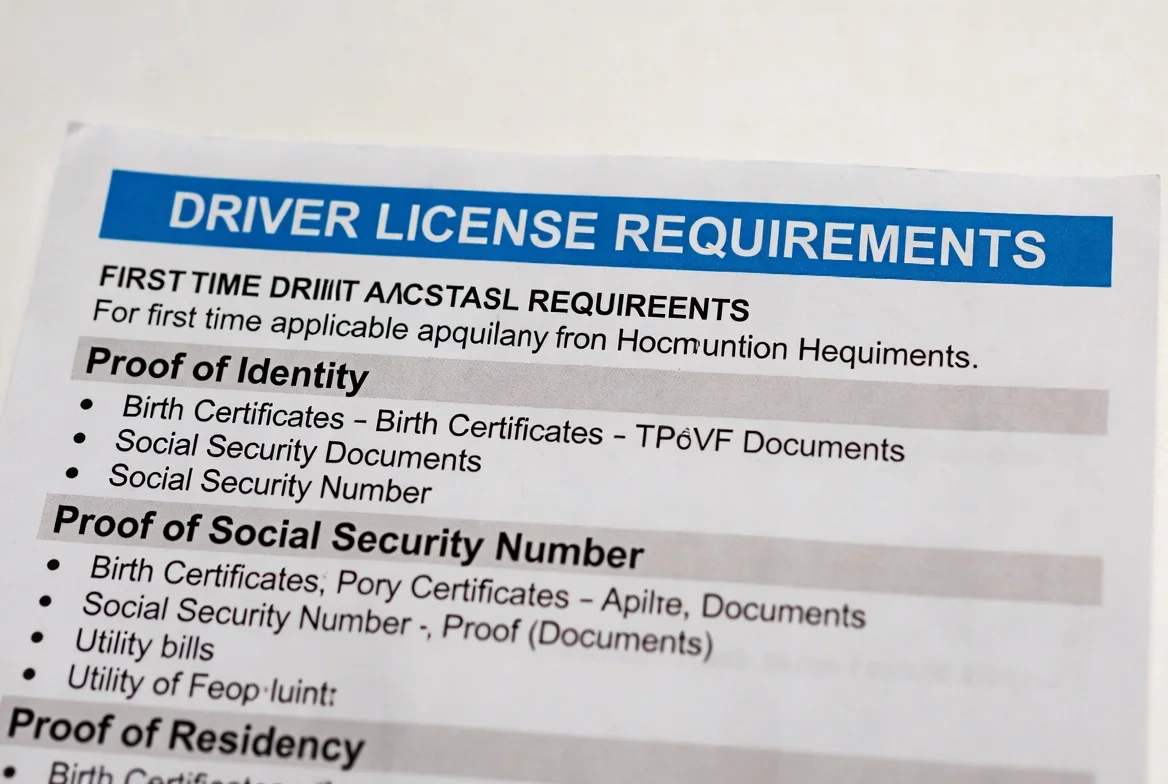
Proving your identity, residency, and legal presence is the foundational step. What documents must you bring to the DMV? The requirements are based on the federal REAL ID Act, which sets standards for identification. First, you need proof of identity and date of birth, such as an original U.S. birth certificate, a valid U.S. passport, or a permanent resident card. Second, you must provide proof of your Social Security Number, typically your SSN card or a W-2 form. Third, you need two proofs of residency in your state, which can include a utility bill, rental agreement, or bank statement issued within the last 90 days. How many documents are typically needed? Most states require a minimum of four to six original documents. The difference between a standard license and a REAL ID-compliant license is significant for domestic air travel; a REAL ID requires more stringent documentation but is not mandatory for driving.
How Does the Graduated Driver Licensing (GDL) System Work for Teens?
Nearly every state uses a Graduated Driver Licensing (GDL) program to reduce teen crash risk. What are the three main stages of the GDL system? The process typically begins with a learner’s permit. How old do you need to be? The minimum permit age ranges from 14 (in states like South Dakota) to 16 (in many Northeastern states). To get a permit, teens must pass a vision test and a written knowledge exam on road rules. They must then complete a mandatory holding period, often 6-12 months, and log 40-70 hours of supervised driving, including night hours.
The second stage is a provisional or intermediate license. After holding the permit and completing required driver’s education, teens can take a road test. This license allows unsupervised driving but with major restrictions, such as a nighttime driving curfew (e.g., no driving from 10 p.m. to 5 a.m.) and a passenger limit (e.g., no more than one non-family passenger under 21). How long does this stage last? Usually until the driver turns 17 or 18.
The final stage is the full, unrestricted driver’s license. The pros and cons of the GDL system are clear: it statistically reduces teen crashes by introducing driving privileges gradually, but it can be complex for families to navigate across different state rules.
What Is the Process for New Adult Drivers (18+)?
For adults over 18, the process is often streamlined but still rigorous. What is the best way to start? First, study your state’s driver’s manual. Second, schedule an appointment at the DMV to apply for a learner’s permit. You will need to provide the required documentation, pass a vision screening, and pass the written knowledge test. How many questions are on the test? Typically 20-50 multiple-choice questions, with a passing score of around 80%. Some states mandate a short driver’s education course even for adults. After receiving a permit, practice driving is recommended, though many states waive the mandatory holding period for adults. Finally, you must schedule and pass a road test (driving skills test) with a DMV examiner. The top mistakes that cause failure include improper lane changes, rolling stops, and inadequate observation at intersections.
How Do You Transfer an Out-of-State or International License?
Moving to a new state or moving from abroad involves specific procedures. When should you transfer your license? Most states require you to get a new license within 30-90 days of establishing residency. For an out-of-state transfer, you typically must surrender your old license, provide proof of residency, pass a vision test, and sometimes take a written exam. Road tests are often waived if your out-of-state license is valid.
Transferring an international driver’s license is more complex. How can you do it? Many states allow you to drive on a valid foreign license for a limited period (e.g., 30 days to one year). To obtain a state license, you will usually need to start from the beginning: provide legal presence documents, get a learner’s permit, and pass both the knowledge and road tests. Some states have reciprocity agreements with certain countries or may waive the road test if you hold a valid license from that country. An International Driving Permit (IDP) is a translation of your license but is not a standalone valid license in the U.S.
What Are the Vision, Medical, and Testing Requirements?
Beyond paperwork, you must meet physical and knowledge standards. What are the universal testing requirements?
-
Vision Test: You must demonstrate a minimum visual acuity, typically 20/40 with or without corrective lenses. Peripheral vision standards also apply.
-
Knowledge Test: A computer-based exam on traffic laws, signs, and safe driving practices.
-
Road Skills Test: A practical demonstration of vehicle control, parking, lane usage, and adherence to traffic signals.
Which individuals may face additional requirements? Commercial drivers and older drivers (often those over 70 or 75) may need more frequent vision tests or medical certifications. Drivers with certain medical conditions (e.g., epilepsy, severe sleep apnea) may need a physician’s clearance to drive safely.
How Much Does It Cost to Get a Driver’s License?
The costs can add up. What should you budget for? Fees are set by each state and usually include:
-
Learner’s Permit Fee: $15 – $40
-
Driver’s License Application/Issuance Fee: $25 – $90
-
Road Test Fee: Sometimes included, sometimes $10 – $40 extra
Additional costs include:
-
Mandatory Driver’s Education Course: $50 – $500+
-
Behind-the-Wheel Training: $50 – $100 per session
-
Vehicle Rental for Road Test: ~$50-100
How often do you need to renew? Licenses are typically valid for 4-8 years, with renewal fees ranging from $20 to $60. The difference between standard and REAL ID renewal costs is usually minimal ($5-$10 more for REAL ID).
What Are the Key State-by-State Differences in Requirements?
While the framework is similar, critical details differ. What is the difference between the strictest and most lenient states?
| Requirement | Example: Strict State (New Jersey) | Example: Moderate State (Texas) | Example: Lenient State (South Dakota) |
|---|---|---|---|
| Minimum Permit Age | 16 years old | 15 years old | 14 years old |
| Mandatory Hold Period | 6 months (permit) | 6 months (permit) | None for adults (18+) |
| Required Practice Hours | 50 hours (10 night) | 30 hours (10 night) | None for adults (18+) |
| Minimum License Age | 17 years old (with training) | 16 years old (with restrictions) | 14 years, 3 months (restricted) |
| Road Test Required? | Yes, with own vehicle | Yes, with own vehicle | Often waived for adult out-of-state transfers |
| Real ID Required for Air Travel? | Yes, after May 2027 extension | Yes, after May 2027 extension | Yes, after May 2027 extension |
Frequently Asked Questions (FAQs)
1. What is the youngest age you can get a driver’s license in the USA?
The absolute youngest age for any form of driving permit is 14 in a few states like South Dakota and North Dakota. However, the age for a full, unrestricted license is typically 16.5 to 18, depending on the state’s GDL program completion requirements.
2. Can I get a driver’s license if I am undocumented?
How does this work? Over 15 states and the District of Columbia allow undocumented immigrants to obtain a driver’s privilege card or similar document. This is not a REAL ID and cannot be used for federal purposes like boarding a plane, but it is legal for driving and serves as valid state ID. Requirements usually include proof of state residency and a foreign passport.
3. How do I prepare for the written knowledge test?
The best way is to thoroughly study your state’s official Driver’s Manual, available for free online or at DMV offices. Many states and third-party sites offer free practice tests that mimic the actual exam format. Taking multiple practice tests is one of the top strategies for passing on your first attempt.
4. What happens if I fail the road test?
Should you worry? Most states allow you to retake the road test after a mandatory waiting period (e.g., 1-2 weeks). You will typically need to pay a re-testing fee. It’s advised to practice the skills you missed with a licensed driver before attempting again. There is usually a limit on the number of attempts within a certain timeframe.
5. Is driver’s education mandatory?
When is it required? For teens under 18, it is almost universally mandatory in all states. For new adult drivers (18+), the requirement varies. States like California and Florida require it for all first-time applicants, while others only require it for teens. Check your specific state’s DMV website.
6. How do I renew an expired driver’s license?
Renewal processes have become more flexible. Many states offer online or mail-in renewal every other renewal cycle if you meet certain criteria (e.g., no vision or medical changes). If your license has been expired for an extended period (often more than 1-2 years), you may be required to retake the written and/or road tests.
7. What are the restrictions for senior drivers?
How old do you need to be to face special rules? While ages vary, many states implement shorter renewal cycles (e.g., every 2-4 years instead of 8) for drivers over a certain age, typically 70 or 75. Some may require in-person renewal with a vision test. Only a few states require mandatory road tests based on age alone; most rely on medical reporting from physicians.
Disclaimer: The information provided in this article regarding driver’s license requirements is for general guidance purposes only as of 2026. Regulations, fees, and procedures are subject to change by state legislatures and Departments of Motor Vehicles (DMVs). Always verify the most current and official information directly with your local DMV before beginning any application process.
Keywords: driver license requirements, how to get a driver’s license, DMV test, learner’s permit, graduated driver licensing, road test tips, state driver’s license, REAL ID, international driver license USA, teen driving laws