
Aerospace Engineer Average Salary in USA 2026

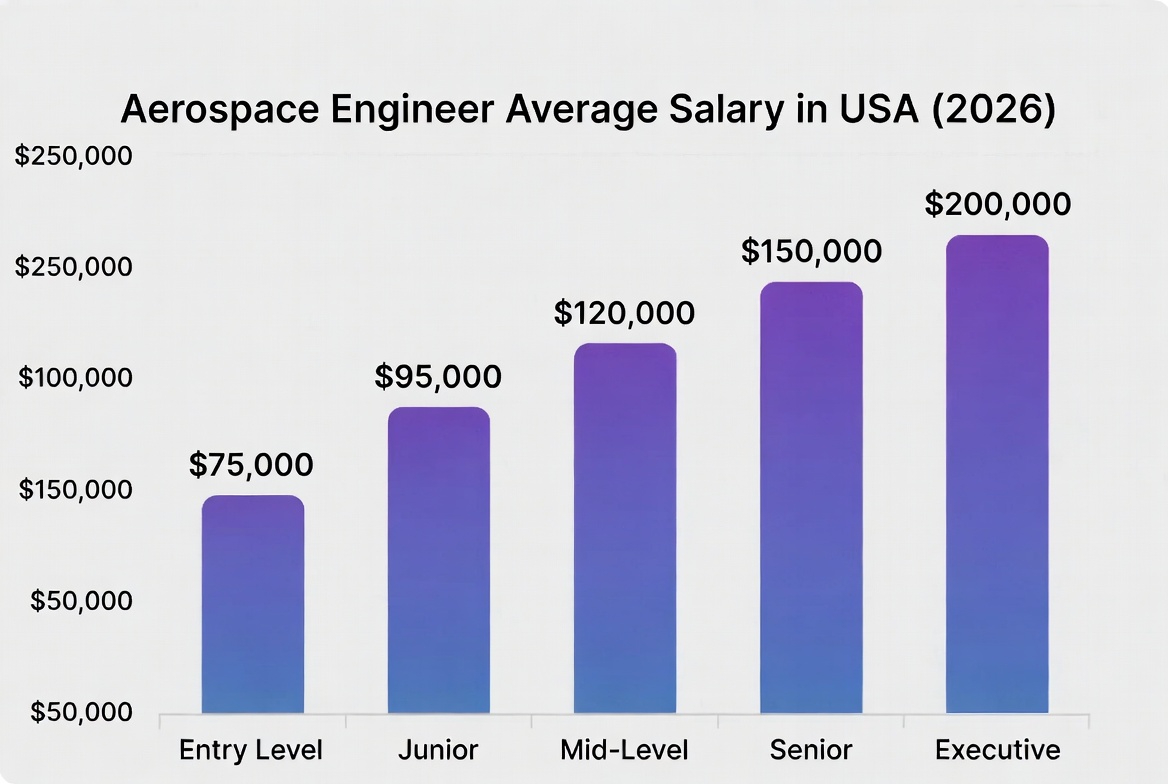

Aerospace engineer salaries in the United States reflect the high skill, education, and specialization required in this advanced field. As of 2026, what is the true earning potential for an aerospace engineer, and how do factors like location, experience, and industry sector influence pay scales? This comprehensive analysis breaks down the latest salary data, trends, and projections to give you a clear picture of compensation for one of engineering’s most prestigious careers. Whether you’re a student planning your future, a professional considering a move, or an employer benchmarking offers, understanding these numbers is crucial for informed decision-making in the dynamic aerospace landscape of 2026.
What Is the Average Salary for an Aerospace Engineer in the USA in 2026?
How much does an aerospace engineer make on a national scale? According to aggregated data from 2026 salary surveys and job postings, the average annual salary for an Aerospace Engineer in the United States is $125,361. This figure represents the median, meaning half of the professionals earn more and half earn less. How does this break down into other pay periods? This average equates to approximately $63.44 per hour, $10,447 per month, or $2,411 per week for a standard full-time role. Entry-level positions, typically requiring 0-3 years of experience, start around $99,500 per year. In contrast, the most experienced and specialized aerospace engineers can command salaries upward of $177,880 annually. The difference between starting and peak salaries highlights the significant financial growth potential within this career path over time.
Which US States Pay the Highest Salaries for Aerospace Engineers in 2026?
Where can aerospace engineers find the most lucrative opportunities? Compensation varies dramatically by state, primarily driven by the concentration of aerospace and defense contractors, government agencies like NASA, and the local cost of living. What are the top-paying states as of 2026?
| Rank | State | Average Annual Salary (2026) | Key Industry Hubs |
|---|---|---|---|
| 1 | California | $141,832 | Los Angeles (SpaceX, Northrop Grumman), San Francisco Bay Area, Mojave |
| 2 | Maryland | $137,418 | Baltimore/Washington D.C. area (NASA Goddard, Lockheed Martin) |
| 3 | Virginia | $134,524 | Arlington, Hampton Roads (NASA Langley, DoD contractors) |
| 4 | Washington | $132,302 | Seattle (Boeing, Blue Origin) |
| 5 | New Mexico | $126,308 | Albuquerque (Kirtland AFB, Spaceport America) |
| 6 | New York | $125,982 | New York City (aerospace finance, R&D), Long Island |
| 7 | Massachusetts | $124,620 | Boston/Cambridge (MIT, Draper Laboratory, Raytheon) |
| 8 | Texas | $119,340 | Houston (NASA JSC, SpaceX), Dallas/Fort Worth (Lockheed Martin) |
| 9 | Colorado | $116,287 | Denver, Colorado Springs (ULA, Ball Aerospace, Space Command) |
| 10 | Alabama | $112,911 | Huntsville (NASA Marshall, Redstone Arsenal) |
How much does location impact pay? The data shows a spread of over $42,000 between the highest (CA) and lowest (SD) paying states. This geographical difference between coastal tech hubs and midwestern states is a critical factor for salary negotiation and career planning.
What Are the Key Factors That Influence an Aerospace Engineer’s Salary?
Beyond location, what other variables determine how much an aerospace engineer earns? Which factors have the most significant impact on compensation packages in 2026?
1. Years of Experience: This is the most direct correlate. How does salary progress with tenure?
-
Entry-Level (0-3 years): $99,500 – $115,000
-
Mid-Career (4-9 years): $115,000 – $140,000
-
Experienced (10-20 years): $140,000 – $165,000
-
Senior/Expert (20+ years): $165,000 – $177,880+
2. Industry Sector: Is it worth specializing in a particular sector? Defense and space exploration typically pay more than commercial aviation. Working for prime contractors (Lockheed Martin, Boeing) often commands higher base pay than smaller subcontractors.
3. Education Level: While a Bachelor’s degree is the minimum, a Master’s degree (M.S.) or Ph.D. can add 10-20% to a starting salary and is often required for advanced R&D or leadership roles.
4. Security Clearance: Holding an active U.S. Department of Defense security clearance (Secret or Top Secret) is a highly valuable asset for defense contractors and can significantly boost earning potential due to the limited candidate pool.
5. Specialized Skills: Proficiency in high-demand tools and disciplines, such as computational fluid dynamics (CFD) software (ANSYS), finite element analysis (FEA), systems engineering (MBSE), and programming (Python, C++), commands premium pay.
How Does Aerospace Engineer Compensation Compare to Related Engineering Jobs?
What is the difference between an aerospace engineer’s salary and that of other similar engineering roles? Understanding this landscape helps in career positioning.
-
Propulsion Engineer: Often a specialization within aerospace, focusing on engines and propulsion systems. Average 2026 Salary: ~$128,000. Pros and cons: Higher specialization can mean higher pay but potentially fewer job openings.
-
Systems Engineer: Focuses on the integration and management of complex systems. Average 2026 Salary: $124,111. A versatile role applicable across aerospace, defense, and tech.
-
Avionics Engineer: Specializes in aircraft electronics and flight systems. Average 2026 Salary: ~$122,000.
-
Mechanical Engineer: A broader field. Average 2026 Salary: ~$95,000. Aerospace engineers typically earn a premium due to the industry’s specialized nature and regulatory environment.
-
Supplier Quality Engineer (Aerospace): Ensures parts from suppliers meet stringent standards. Average 2026 Salary: $115,313.
The data confirms that aerospace engineer salaries are generally at the higher end of the engineering spectrum, reflecting the field’s technical complexity and critical safety requirements.
What Is the Future Job Outlook and Salary Trajectory for Aerospace Engineers?
How fast is the field growing, and what should professionals expect in the coming years? The U.S. Bureau of Labor Statistics projects employment for aerospace engineers to grow about as fast as the average for all occupations through 2034. However, this aggregate number masks high growth in specific areas: space exploration (commercial spaceflight, satellite constellations), defense technology (hypersonics, unmanned systems), and sustainable aviation (electric/hybrid propulsion, advanced materials). Salaries in these cutting-edge sub-fields are expected to outpace the industry average. The best way to ensure a strong salary trajectory is to continuously upskill in these high-growth areas, as the demand for expertise in digital engineering, model-based systems engineering (MBSE), and autonomy is sharply rising.
How Can Aerospace Engineers Maximize Their Earning Potential in 2026?
What are the best ways for an aerospace engineer to increase their salary? A proactive, multi-faceted strategy is key.
1. Strategic Certification: Pursue recognized certifications like Professional Engineer (PE) license (valuable for consulting and government work) or INCOSE’s Certified Systems Engineering Professional (CSEP).
2. Targeted Skill Development: Invest in learning the software and methodologies most requested in high-paying job postings, such as CATIA, NX, Simulink, or DO-178C standards for avionics software.
3. Geographic Mobility: Being willing to relocate to a major aerospace hub (e.g., California, Washington, Texas, Alabama) remains one of the most direct paths to a higher salary.
4. Negotiation Tactics: How should you approach salary negotiation? Always research the specific company and role’s pay band on sites like Levels.fyi or Glassdoor. Frame your request around the value of your specialized skills, experience, and clearances, not just your personal needs.
5. Advanced Degrees: For those in R&D or aiming for executive roles, an M.B.A. or a technical Master’s/Ph.D. from a top-tier university can open doors to the highest-paying positions.
Frequently Asked Questions (FAQs)
1. What is the entry-level aerospace engineer salary in the USA for 2026?
The average entry-level salary for an Aerospace Engineer in the USA in 2026 is approximately $99,500 per year. This can vary based on the employer’s location, the candidate’s university pedigree, and relevant internship experience. Graduates with co-op or internship experience at major aerospace firms often command starting salaries at the higher end of this range.
2. Do aerospace engineers get paid more than pilots?
How much more or less? It depends on the pilot’s role. A starting commercial pilot at a regional airline may earn less than an entry-level aerospace engineer. However, senior captains at major airlines can have a higher total compensation (often exceeding $300,000) than most non-executive aerospace engineers. The career paths and pay progression structures are very different.
3. What benefits are commonly included with an aerospace engineer salary?
Beyond base pay, total compensation typically includes a comprehensive benefits package: health/dental/vision insurance, a 401(k) retirement plan with company match, paid time off (PTO), tuition reimbursement, professional development allowances, and often annual performance bonuses. Many defense contractors also offer relocation assistance and support for maintaining security clearances.
4. Is the aerospace engineering salary worth the education cost?
Should you pursue this career from a financial perspective? Given the high average starting and mid-career salaries, the return on investment for a Bachelor’s degree in Aerospace Engineering is generally strong, especially from public, in-state universities. The pros include high earning potential, intellectual challenge, and job prestige. The cons can include cyclical industry layoffs, location constraints, and the stress of high-stakes projects.
5. How does salary progression work for aerospace engineers?
Salary growth is typically achieved through a combination of annual merit increases (2-4%), promotions to higher technical grades (e.g., Engineer I, II, III, Senior, Principal), and strategic job changes. Moving to a new company every 3-5 years, if done strategically, has historically been one of the most effective ways to achieve significant salary jumps.
6. What is the highest-paying specialization within aerospace engineering?
As of 2026, specializations in guidance, navigation, and control (GNC), propulsion (especially for hypersonic systems), systems architecture, and radar systems engineering are among the highest paid. Roles that require an active Top Secret clearance with polygraph also command substantial salary premiums due to the sensitive nature of the work.
Disclaimer: The salary data, figures, and projections presented in this article are based on aggregated public sources, job postings, and survey data for the year 2026. They are intended for informational and guidance purposes only. Actual salaries for individual aerospace engineers can vary widely based on specific employer, qualifications, negotiation, and economic conditions. This information should not be considered a guarantee or offer of specific compensation.
Keywords: aerospace engineer salary, average engineer salary USA 2026, aerospace engineering jobs, highest paying engineering jobs, entry-level aerospace engineer, NASA engineer salary, Lockheed Martin salary, Boeing engineer pay, systems engineer salary, propulsion engineer jobs