A Guide to Community College Admission for Immigrants

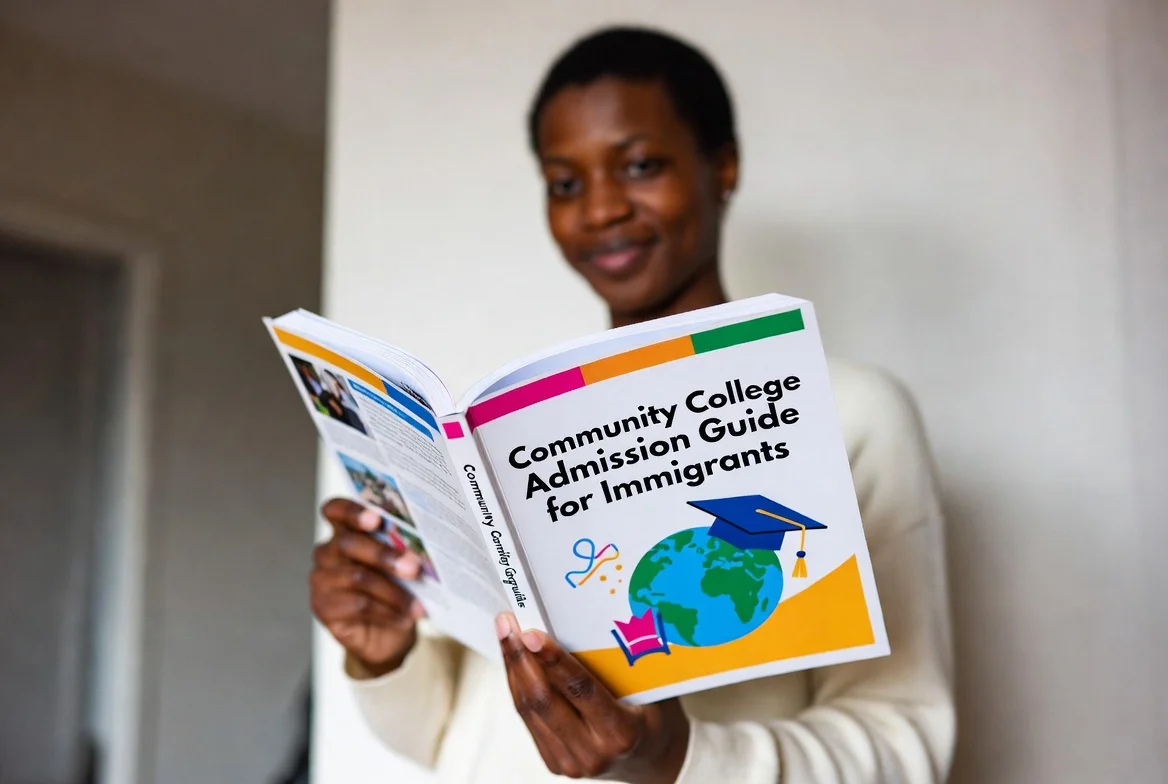

Community college admission for immigrants is a critical pathway to higher education, career advancement, and successful integration in the United States. For new arrivals and established immigrants alike, navigating the application process can seem daunting. What are the specific requirements for non-citizens? How can you access financial aid? This comprehensive guide breaks down the steps, clarifies common challenges, and provides actionable strategies to help immigrant students successfully gain admission to a community college and build a foundation for their future.
What Are the Basic Admission Requirements for Immigrant Students?
Understanding the difference between requirements for U.S. citizens and immigrants is the first crucial step. What should prospective immigrant students prepare? Generally, community colleges have an open-admission or minimally selective policy, but specific documentation is required for international or immigrant applicants. First, proof of secondary school completion is needed. This could be a high school diploma, GED, or equivalent from your home country, often requiring a translation and sometimes an evaluation. Second, demonstrating English language proficiency is typically mandatory unless you have prior education in English. Which tests are accepted? Commonly the TOEFL, IELTS, or the college’s own placement test. Third, you must provide evidence of immigration status. This includes a valid passport, visa (such as F-1, M-1, J-1, or permanent resident/green card), and I-94 arrival/departure record. How can you navigate these requirements? The best way is to contact the international student office or admissions department at your target college directly, as policies can vary significantly by state and institution.
How to Navigate the Application Process as an Immigrant?
The application process involves several key steps that require careful attention to detail. What is the best way to ensure a smooth application? Start by researching and selecting colleges that offer programs aligned with your career goals and have strong support services for immigrant students, such as English as a Second Language (ESL) programs and immigrant resource centers. Next, complete the application form meticulously. For the 2026 academic year, most colleges use online platforms. Should you apply as an international student or a domestic student? This depends entirely on your visa status. Green card holders and refugees/asylees typically apply as domestic students, while those on F-1 or other student visas apply through the international admissions office. Key components include the application fee (which may have waivers), academic transcripts, test scores, and a personal statement. How long does the process take? It’s advisable to start at least 6-9 months before your intended start date to account for document gathering, testing, and visa processing times.
What Financial Aid and Scholarships Are Available for Immigrant Students?
Financing education is a top concern. What are the ways immigrant students can fund their community college education? The availability of aid heavily depends on immigration status. Permanent residents (green card holders), refugees, asylees, TPS holders, and certain other humanitarian statuses are generally eligible for federal financial aid by completing the Free Application for Federal Student Aid (FAFSA). DACA recipients and undocumented students are not eligible for federal aid but may qualify for state or institutional aid depending on state laws. For example, states like California, New York, Texas, and Washington have policies allowing certain undocumented students to pay in-state tuition and access state aid. How can you find scholarships? Many private scholarships do not require citizenship. Resources like TheDream.US, college-specific immigrant success scholarships, and community-based organization grants are essential. The top strategy is to work closely with the college’s financial aid office and seek out local immigrant advocacy groups.
How Does Visa Status Impact Admission and Enrollment?
Your visa status dictates your application pathway and obligations. What is the difference between applying with an F-1 visa versus a green card? F-1/M-1 Student Visa Holders must apply through international admissions, prove financial ability to cover tuition and living expenses (Form I-134), maintain full-time enrollment, and intend to return to their home country after studies. They are generally not eligible for federal aid and pay out-of-state or international tuition rates. Permanent Residents (Green Card Holders) apply as domestic students, are eligible for in-state tuition after establishing residency (often one year), can work on or off-campus without restriction, and are eligible for federal financial aid via the FAFSA. Other Statuses (e.g., H-4, L-2, DACA) have varying rules. What should you do first? Consult with an immigration attorney or a qualified Designated School Official (DSO) at the college to understand your specific rights and limitations.
What Support Services Should Immigrant Students Look For?
Choosing a college with robust support systems is crucial for success. Which services are most valuable for immigrant students? First, Comprehensive ESL and Language Support programs are vital for academic success. Second, a dedicated International Student Office or Immigrant Student Resource Center can provide guidance on visas, cultural adjustment, and legal resources. Third, Academic and Career Counseling tailored to understand international credentials and career pathways in the U.S. is essential. Fourth, Mental Health and Wellness Services that are culturally competent can help manage the stress of acclimation. How can you evaluate these services? Look for colleges recognized as “Hispanic-Serving Institutions” (HSI) or “Asian American and Native American Pacific Islander-Serving Institutions” (AANAPISI), as they often have established support frameworks. Reach out to current immigrant students through college forums or social media groups to get firsthand accounts.
What Are the Common Challenges and How to Overcome Them?
Immigrant students face unique hurdles. What are the top challenges and their solutions?
-
Language Barrier: This affects academic performance and social integration. Solution: Enroll in intensive ESL programs before or during your degree, utilize tutoring centers, and practice language skills in community settings.
-
Credential Evaluation: Foreign high school or university transcripts may not be immediately recognized. Solution: Use credential evaluation services like WES or NACES members to get a U.S. equivalency report.
-
Cultural and Academic Adjustment: The U.S. classroom style may be more participatory and less lecture-based. Solution: Take advantage of student orientation programs, join study groups, and connect with mentorship programs.
-
Financing and Residency for Tuition: Establishing in-state tuition residency can be complex. Solution: Provide ample proof of domicile (lease, driver’s license, tax returns) and apply for residency reclassification after one year. How often do students face these issues? Nearly all immigrant students encounter at least one; proactive planning is key.
| Challenge | Primary Solution | Key Resource at College |
|---|---|---|
| Language Proficiency | Enroll in Credit ESL Courses | ESL Department / Learning Center |
| Understanding Visa Rules | Regular Advising Sessions | International Student Office |
| Financial Shortfalls | Apply for Private Scholarships | Financial Aid Office / Foundation |
| Academic Cultural Shock | Utilize Tutoring & Workshops | Academic Success Center |
| Social Integration | Join Clubs & Immigrant Associations | Student Life / Cultural Centers |
How to Transition from Community College to a University?
For many immigrants, community college is the first step toward a bachelor’s degree. What is the best way to ensure a smooth transfer? First, meet with a transfer counselor early and often—ideally in your first semester. They can help you select courses that will fulfill general education requirements at target four-year universities. Second, research articulation agreements. Many community colleges have guaranteed admission agreements (e.g., TAG in California) with state universities for students who meet specific GPA and course requirements. Third, maintain a strong GPA, as it is a critical factor for admission and scholarships. Fourth, build a portfolio through internships, projects, and letters of recommendation. How long does the transfer process take? With full-time enrollment and careful planning, most students are ready to transfer after two years. For immigrants, showcasing this educational progression can also be beneficial for long-term visa status adjustments (e.g., from F-1 to H-1B).
Frequently Asked Questions (FAQs)
1. Can undocumented immigrants go to community college?
Yes. There is no federal law prohibiting the admission of undocumented immigrants to U.S. colleges, including community colleges. Admission policies are set by states and individual institutions. Many community colleges accept undocumented students. The primary barriers are often related to tuition (whether they qualify for in-state rates) and access to financial aid, which varies by state.
2. Do I need a student visa (F-1) to attend community college?
Not necessarily. If you are already in the U.S. under another status (like a green card, H-4, L-2, or DACA), you can study without an F-1 visa. The F-1 visa is specifically for those entering the U.S. primarily for full-time study. If you are outside the U.S. and wish to come to study, you will need to obtain an F-1 or M-1 visa.
3. What is the difference between in-state and out-of-state tuition, and who qualifies?
In-state tuition is a significantly lower rate offered to residents of the state where the college is located. Eligibility is based on proof of domicile (legal residence) for a period, often one year, with intent to remain. Rules for immigrants are strict: F-1 visa holders almost never qualify; green card holders can qualify after establishing residency; and some states have laws allowing undocumented students who attended state high schools to qualify.
4. How important are English proficiency scores for admission?
They are very important if your prior education was not in English. Most colleges require a minimum score on tests like TOEFL (iBT 61-80) or IELTS (5.5-6.5). However, many colleges offer conditional admission where you can be admitted to the college but must first complete ESL courses until you reach the required proficiency level to begin academic coursework.
5. Can I work while studying at a community college as an immigrant?
It depends on your status. F-1 students can work on-campus for up to 20 hours per week during sessions. Off-campus work requires authorization (CPT/OPT) related to their field of study. Green card holders have no work restrictions. DACA recipients have work authorization. Other statuses vary. Always consult your DSO or immigration advisor before accepting employment.
6. What is a SEVIS fee, and who has to pay it?
The SEVIS (Student and Exchange Visitor Information System) fee is a mandatory U.S. government fee paid by F-1, F-3, M-1, M-3, and J-1 visa applicants before their visa interview. It supports the administration of the student tracking system. Green card holders and other immigrants applying as domestic students do not pay this fee.
7. Where can I find free help with the application process?
Excellent free resources include:
-
The community college’s own International Student Office and Admissions Counselors.
-
Non-profit organizations like USAHello, Immigrants Rising, and TheDream.US.
-
Local public libraries and community-based organizations (CBOs) that offer immigration and education legal clinics.
Disclaimer: The information provided in this guide is for general informational purposes only and does not constitute legal, financial, or immigration advice. Immigration laws and institutional policies are complex and subject to change. Prospective students must consult directly with the admissions office of their chosen institution, a qualified immigration attorney, or a Designated School Official (DSO) to understand the requirements and options specific to their individual circumstances.
Keywords: community college admission immigrants, how to apply to community college as immigrant, immigrant student resources, community college for international students, F-1 visa community college, financial aid for immigrant students, undocumented student college admission, ESL community college, in-state tuition immigrants, transfer from community college