Equipment Operator Average Salary in USA, 2026


Equipment Operator salaries in the United States are a key metric for understanding wages in construction, logistics, and industrial sectors. As we move through 2026, what factors are driving the national average of $41,470 per year? How does location, experience, and specialization impact an operator’s earning potential? This comprehensive analysis breaks down the latest salary data, explores regional variations, and provides insights into the career trajectory for equipment operators nationwide. Understanding these figures is essential for both job seekers negotiating offers and employers aiming to remain competitive in a dynamic labor market.
What Is the National Salary Range for Equipment Operators in 2026?
Why do equipment operator salaries vary so widely across the country? The difference between entry-level and experienced wages is primarily driven by skill proficiency, certifications, and the type of machinery operated. The national data for 2026 reveals a median annual salary of $41,470, which breaks down to approximately $20.99 per hour. How much can a new operator expect to earn? Entry-level positions typically start around $37,440 per year. Conversely, how high can earnings go? The most experienced and highly skilled operators, particularly those handling complex or heavy equipment, can make up to $51,555 annually. This range highlights the significant financial growth potential within this hands-on career path. The best way to advance is through gaining experience, obtaining specialized certifications (e.g., for cranes, bulldozers, or excavators), and demonstrating a consistent record of safety and efficiency.
Which States Pay the Highest and Lowest Salaries for Equipment Operators?
Geographical location is one of the most decisive factors for an equipment operator’s pay. What is the best way to gauge regional earning potential? The data shows a clear disparity, with states involved in major energy, mining, and large-scale construction projects offering the highest wages. Which states top the list in 2026?
-
Alaska leads with an average of $54,350, driven by remote project premiums and the oil and gas industry.
-
Wyoming follows at $48,750, benefiting from mining and energy sectors.
-
Hawaii and Montana also offer high averages ($47,500 and $46,800), influenced by construction costs and natural resource projects.
On the other end of the spectrum, which states have the lowest average salaries? States with lower costs of living and less intensive industrial activity show lower averages.
-
Mississippi: $34,542
-
North Carolina: $34,985
-
Michigan: $35,037
How far can your salary stretch? While states like Alaska pay more, the high cost of living must be considered. An operator earning $54,350 in Anchorage may have similar purchasing power to one earning $40,000 in a state with a lower cost of living.
How Do Experience and Specialization Affect an Operator’s Earnings?
An operator’s value is directly tied to their skills. What are the top specializations that command higher pay? Operators certified to run complex machinery like tower cranes, hydraulic excavators, or continuous mining machines typically earn a substantial premium over those operating standard forklifts or skid-steer loaders. How many years of experience are needed to reach the top of the pay scale? It typically takes 5-10 years of proven, safe operation to access the highest-paying positions. Furthermore, which industries pay the most? Operators in oil and gas extraction, heavy civil engineering construction (e.g., building highways and bridges), and utility system construction often have higher average wages than those in general building construction or landscaping supply. Obtaining a Commercial Driver’s License (CDL) to transport equipment can also significantly boost an operator’s marketability and salary.
What Is the Job Outlook and Career Path for Equipment Operators in 2026?
Is it worth pursuing a career as an equipment operator in the current economic climate? The outlook remains stable, fueled by ongoing infrastructure investment, renewable energy projects, and residential construction. What should new entrants focus on? The career path often begins with a role as a Laborer (avg. $35,139) or Material Handler (avg. $38,496), progressing to a general Equipment Operator ($41,470). With specialization, one can advance to roles like Maintenance Technician ($56,193) or move into supervisory positions. How can you accelerate career growth? Apprenticeships and training programs offered by unions (e.g., International Union of Operating Engineers) and trade schools provide direct pathways to high-skill, high-wage jobs. The demand for operators who are adept with GPS and machine control technology is also growing rapidly.
What Are the Pros and Cons of a Career as an Equipment Operator?
Understanding the full picture is crucial. What are the pros of this career?
-
Strong Earning Potential: With overtime and specialized skills, earnings can exceed the median.
-
Minimal Formal Education Required: Often, a high school diploma and on-the-job training are sufficient to start.
-
Hands-On, Outdoor Work: Ideal for those who dislike desk jobs.
-
Critical Role: Operators are essential to building and maintaining infrastructure.
What are the cons to consider?
-
Physical Demand: The work can be strenuous and is subject to all weather conditions.
-
Safety Risks: Working around heavy machinery and construction sites carries inherent hazards.
-
Potential for Layoffs: Employment can be cyclical, tied to construction seasons and project funding.
-
Earnings Ceiling: While solid, the top salary may be lower than some other skilled trades requiring similar experience.
Table: Equipment Operator Salary Snapshot by State (2026)
| State | Average Annual Salary | Key Industry Drivers |
|---|---|---|
| Alaska | $54,350 | Oil & Gas, Remote Projects |
| Wyoming | $48,750 | Mining, Energy |
| Hawaii | $47,500 | Tourism Construction, High Cost of Living |
| Montana | $46,800 | Natural Resources, Civil Engineering |
| North Dakota | $45,661 | Energy, Agriculture |
| Colorado | $45,351 | Infrastructure, Residential Boom |
| National Median | $41,470 | Construction, Logistics, Manufacturing |
| Michigan | $35,037 | Automotive, General Manufacturing |
| North Carolina | $34,985 | Residential Construction, Logistics |
| Mississippi | $34,542 | Agriculture, General Construction |
Frequently Asked Questions (FAQs)
1. What is the average hourly wage for an Equipment Operator in 2026?
The average hourly wage is approximately $20.99, calculated from the median annual salary of $41,470. Entry-level wages start around $18.00 per hour, while experienced operators can earn over $24.75 per hour.
2. How much does an Equipment Operator make after taxes?
The take-home pay after taxes varies greatly by state (due to state income taxes), marital status, and deductions. As a general estimate, a single filer earning the national median of $41,470 in a state with average taxes might take home roughly $33,000 to $35,000 annually. Using an online salary calculator with your specific location is the best way to get an accurate estimate.
3. Which type of equipment pays the most?
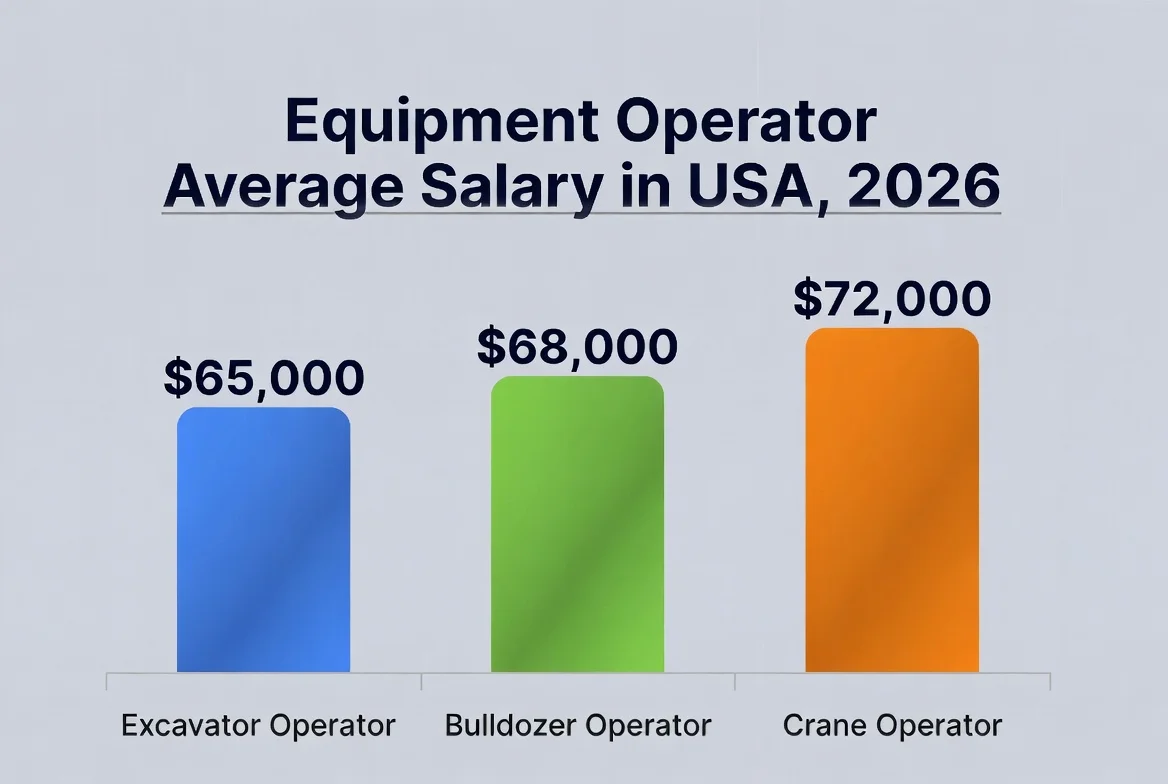
Operators of cranes (especially tower and mobile cranes), pile drivers, dragline excavators, and continuous mining machines typically earn the highest wages due to the complexity, responsibility, and required certifications for these machines.
4. Are Equipment Operator salaries keeping up with inflation in 2026?
Wage growth in the trades has been robust in recent years. While the median salary has seen increases, it is essential to compare annual raises to inflation rates. In many high-demand regions and specialties, salary increases have met or exceeded inflation, particularly for skilled and certified operators.
5. What is the best state to live in as an Equipment Operator?
The “best” state depends on priorities. For the highest raw salary, Alaska or Wyoming are top choices. For a balance of good pay and lower living costs, states like Colorado, North Dakota, or Washington may be preferable. For steady job availability, states with large populations and continuous construction like Texas, Florida, and California offer many opportunities, albeit with varying wage levels.
6. Do Equipment Operators get paid overtime?
Yes, overtime is very common in this field, especially when project deadlines are tight. Operators are typically paid time-and-a-half for hours worked over 40 in a week, which can significantly boost annual earnings.
Disclaimer: The salary data and figures presented in this article are based on aggregate market data from 2026 and are intended for general informational purposes only. Individual salaries will vary based on experience, specific employer, union agreements, precise location within a state, and current economic conditions. This information should not be used as the sole basis for financial or career decisions.
Keywords: equipment operator salary, heavy equipment operator salary 2026, how much does an equipment operator make, equipment operator hourly wage, crane operator salary, construction equipment operator, operating engineer salary, equipment operator jobs, salary by state, trade jobs salary