Professor Average Salary in USA, 2026


Professor salaries in the United States represent a wide spectrum, influenced heavily by academic discipline, institution type, tenure status, and geographic location. As of 2026, what is the true earning potential for a professor, and how do factors like research output and institutional prestige impact compensation? This comprehensive analysis breaks down the national average, state-by-state variations, and the key determinants that define academic remuneration, providing a clear financial picture for current and aspiring educators.
What Is the National Average Salary for a Professor in the USA?
The national average provides a baseline, but what does it truly encompass? How much does a professor make on average in the United States? As of 2026, the average annual salary for a professor is $94,541, which equates to approximately $47.84 per hour. However, this median figure masks a significant range. Where does the salary spectrum begin and end? Entry-level professor positions, often including non-tenure-track roles or instructors, start around $63,852 per year. In contrast, the most experienced, tenured full professors at prestigious research institutions can earn upwards of $161,207 annually. This disparity highlights the difference between early-career and late-career academic compensation, driven by tenure, publication records, and administrative duties.
Which US States Pay the Highest Salaries for Professors?
Geographic location is a critical salary determinant. Which states offer the most competitive professor salaries, and why? The data for 2026 shows a clear concentration of higher pay in states with major research universities and high costs of living.
-
California leads with an average of $104,296, driven by its world-class public university system (UC) and private institutions.
-
Alaska follows at $100,000, often due to retention incentives and specialized programs.
-
Colorado ($88,000), Illinois ($86,871), and Washington ($85,891) round out the top five, reflecting strong state investment in higher education and competitive academic job markets.
How far does the geographic pay gap extend? The difference between the highest-paying state (California) and the lowest-paying state (South Carolina at $52,000) is over $52,000 annually. This variation is influenced by state funding for education, private endowment sizes, and regional economic conditions.
What Are the Key Factors That Influence a Professor’s Salary?
Beyond geography, multiple variables shape compensation. What is the best way to understand the salary structure in academia? The primary factors include:
-
Academic Rank and Tenure: The progression from Assistant Professor to Associate Professor to Full Professor brings substantial pay increases. Tenure, typically granted at the associate level, provides job security and a significant salary bump.
-
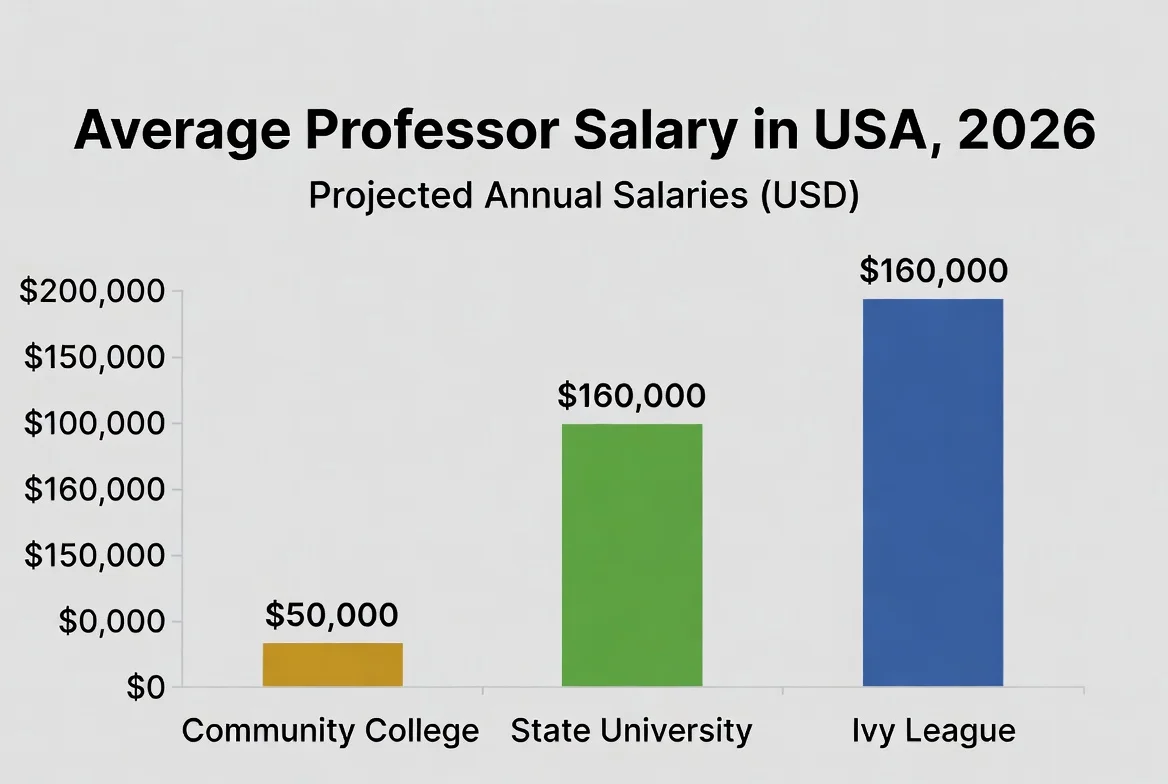
Institution Type: What is the difference between a public state university, a private Ivy League, and a community college? Research-intensive R1 universities (both public and private) pay the highest salaries, followed by liberal arts colleges and comprehensive state universities. Community colleges generally offer lower base salaries but often have different teaching loads.
-
Academic Discipline: Professors in high-demand fields like Engineering, Computer Science, Business, and Law often command “market premiums” that can be 30-50% higher than salaries in humanities or social sciences within the same institution.
-
Research and Publication Record: A strong record of securing grant funding and publishing in top-tier journals directly increases a professor’s value and bargaining power.
Is it worth pursuing administrative roles? Taking on roles like Department Chair, Dean, or Provost can significantly increase compensation but comes with reduced focus on teaching and research.
How Does Professor Compensation Compare to Related Academic Roles?
Understanding the academic salary landscape requires context. What are the pros and cons of different academic positions compared to a tenured professor?
| Related Academic Role | Average Salary (2026) | Key Focus & Typical Path | Primary Difference from Professor |
|---|---|---|---|
| Adjunct Faculty | $96,250 | Teaching-focused, often part-time or contract-based without tenure track. | Higher potential short-term pay per course but lacks job security, benefits, and research support. |
| Assistant Professor | $53,810 | Tenure-track entry-level role combining teaching, research, and service. | The starting point for the professorial track, with lower pay but a path to tenure and higher earnings. |
| Associate Professor | $52,980 | Mid-level tenured (or tenure-track) position with established research. | Note: This average appears skewed; typically, Associate Professors earn more than Assistants. This data may include many non-tenured or specific field roles. |
| Research Associate | $63,043 | Primarily research-focused, often soft-money funded through grants. | Focuses almost exclusively on research without standard teaching duties; position stability is tied to grant funding. |
| Instructor | $49,375 | Teaching-heavy role, often non-tenure-track and with a multi-year contract. | Lower pay and less emphasis on original research compared to tenure-track professor roles. |
What Is the Career Path and Earning Trajectory for a Professor?
The academic career ladder is long and well-defined. How long does it take to reach the highest salary levels? The typical path involves:
-
Years 0-6: Assistant Professor. Salary growth is moderate, tied to annual raises and successful mid-tenure reviews.
-
Years 6-12: After achieving tenure and promotion to Associate Professor, a notable salary increase occurs (often 15-25%).
-
Years 12+: Full Professor. Salaries plateau less, with continued growth based on merit, leadership roles, and external offers. How can you accelerate this trajectory? Securing prestigious fellowships, publishing groundbreaking research, and receiving competing job offers are the most effective levers.
What Are the Top Benefits and Perks Beyond Base Salary?
Academic compensation includes significant non-salary benefits. Should you value these when evaluating total compensation?
-
Retirement Plans: Universities often offer generous contribution matches to 403(b) or similar plans.
-
Health Insurance: Typically comprehensive and subsidized plans for employees and families.
-
Sabbaticals: Paid or partially-paid leave every 6-7 years for dedicated research or study.
-
Tuition Remission: Heavily discounted or free tuition for dependents at the institution.
-
Intellectual Freedom & Job Security: Tenure provides unparalleled long-term security and autonomy in research pursuits.
The pros and cons are clear: while private-sector roles in some fields may offer higher immediate cash compensation, the total rewards package and lifestyle of a tenured professor are unique.
Frequently Asked Questions (FAQs)
1. What is the difference between a Professor and an Adjunct Professor?
A Professor (typically tenured or tenure-track) is a full-time employee with responsibilities in teaching, research, and service. They receive a salary, benefits, and job security. An Adjunct Professor is usually a part-time contractual instructor paid per course, often without benefits, office space, or a role in university governance.
2. How much do Ivy League professors make?
Salaries at Ivy League and other elite private universities are among the highest in the profession. As of 2026, full professors at these institutions can frequently earn between $180,000 to $250,000+ annually, with star faculty in law, business, or medicine earning significantly more.
3. Do professors get paid during the summer?
This depends on their contract. 9-month contracts are common for teaching-focused roles, meaning salary is paid only during the academic year. However, professors can often supplement income through summer teaching, grant-funded research, or external consulting. 12-month contracts are more common for research-focused professors or those with administrative duties.
4. What is the job outlook for professors?
The Bureau of Labor Statistics projects average growth for postsecondary teachers. However, competition for tenure-track positions is extremely intense across most fields. The best opportunities are in high-demand disciplines like healthcare, STEM, and business.
5. How can a professor negotiate a higher salary?
Negotiation is most effective at the job offer stage for Assistant Professors or when receiving an external offer. Leveraging a strong publication record, significant grant funding, and competing offers are the best ways to negotiate a higher salary, reduced teaching load, or increased research support.
Disclaimer: The salary data and figures presented in this article are based on aggregated public sources and user submissions for the year 2026. They are intended for general informational purposes only. Actual salaries for professors can vary dramatically based on the specific institution, department, individual qualifications, negotiation, and unpublished compensation components. This information should not be used as the sole basis for career or financial decisions.
Keywords: professor average salary, professor salary USA, college professor salary, university professor pay, academic salary 2026, tenured professor salary, adjunct professor pay, professor jobs, higher education salary, faculty compensation