
Instructor Average Salary in USA, 2026

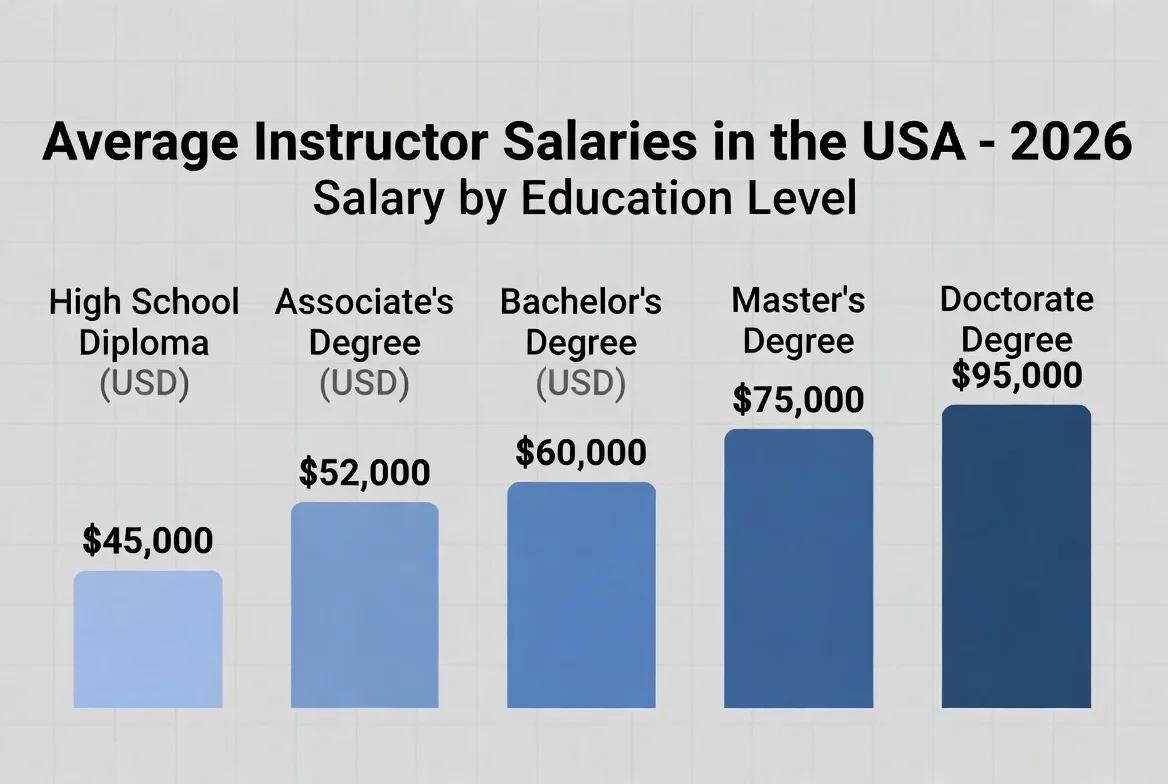

Instructor salaries in the United States vary widely based on specialization, institution type, and geographic location. As of 2026, what is the true earning potential for educators and trainers across the nation? How can factors like subject matter, industry, and credentials significantly impact your pay? This comprehensive analysis breaks down the latest salary data, regional variations, and career pathways to help you understand the financial landscape of the instruction profession in the current year.
What Is the Average Salary for an Instructor in the United States?
How much can a typical instructor expect to earn annually? According to 2026 aggregated data from 10,000 salaries, the average Instructor in the United States earns $49,375 per year, which translates to approximately $24.99 per hour. This median figure represents the midpoint, meaning half of all instructors earn more and half earn less. What is the difference between entry-level and experienced pay? Entry-level instructor positions typically start around $37,343 per year, while the top 10% of most experienced and specialized instructors can make up to $94,463 annually. This wide range highlights the importance of factors like field, education level, and employer type in determining compensation.
How Do Instructor Salaries Vary by State and Region?
Where in the United States do instructors earn the highest wages? Geographic location is one of the most significant determinants of salary. Which states offer the top pay for instructors as of 2026?
-
Delaware leads with an average of $76,960.
-
West Virginia follows at $73,050.
-
California averages $64,875.
-
Wisconsin and Alaska round out the top five with $62,956 and $59,000, respectively.
Conversely, which states have the lowest average instructor salaries? The bottom of the list includes Iowa at $40,463, Ohio at $38,259, and North Dakota at $36,500. How much of a pay gap exists between the highest and lowest paying states? The difference between Delaware and North Dakota is over $40,000, underscoring the critical impact of location and possibly state funding for educational roles.
What Are the Key Factors That Influence an Instructor’s Salary?
Beyond location, which factors most heavily influence earning potential? Several key variables dictate salary levels.
-
Industry and Subject Matter: Corporate trainers in tech or healthcare often earn more than fitness or driving instructors. STEM instructors generally command higher pay than those in the humanities at the collegiate level.
-
Type of Institution: Instructors at private universities, specialized technical schools, or within corporate settings typically out-earn those at community colleges or public K-12 systems (though titled as teachers).
-
Credentials and Experience: A master’s degree or Ph.D., professional certifications, and years of direct, relevant experience are directly correlated with higher pay. How many years of experience does it take to reach the top tier? Often 10+ years in a specialized field.
-
Employment Status: Full-time, tenured, or salaried positions offer stability and benefits, while adjunct or part-time roles, which are prevalent, pay per course or hour and often lack benefits, significantly lowering annual compensation.
How Does Instructor Pay Compare to Related Educational Roles?
What is the difference between an Instructor’s salary and that of similar academic positions? Understanding the hierarchy and terminology is crucial for career planning.
| Related Job Title | Average Salary (2026) | Typical Role & Context |
|---|---|---|
| Professor | $94,541 | Tenured or tenure-track faculty at colleges/universities, with research duties. |
| Associate Professor | $52,980 | Mid-level university faculty, often tenure-track. |
| Assistant Professor | $53,810 | Entry-level tenure-track university faculty. |
| Adjunct Instructor | $53,398 | Part-time, per-course faculty at universities/colleges. |
| Teacher | $54,556 | Typically refers to K-12 licensed educators. |
| Instructor | $49,375 | Broad title for trainers in higher ed, vocational, corporate, or recreational settings. |
The data shows that the title “Instructor” often sits at a different, sometimes lower, pay band than tenured “Professor” roles but can be comparable to or exceed some adjunct and teaching positions depending on the sector.
What Is the Career Path and Growth Potential for an Instructor?
How can you increase your salary as an instructor over time? Career progression is not always linear but can be strategically navigated.
-
Specialization: Becoming an expert in a high-demand, technical field (e.g., AI, cybersecurity, advanced manufacturing) is one of the best ways to command a premium.
-
Transitioning Sectors: Moving from public community college instruction to a corporate training role in a Fortune 500 company can result in a substantial pay increase.
-
Developing Curriculum: Creating and selling proprietary course materials or online content can generate additional revenue streams.
-
Moving into Administration: Advancing to roles like Department Chair, Dean, or Director of Training often comes with a significant salary boost. How long does this path take? It typically requires 5-15 years of proven teaching excellence and leadership.
What Are the Pros and Cons of a Career as an Instructor?
Is it worth pursuing a career as an instructor? The role offers unique rewards and challenges.
Pros:
-
Intrinsic Reward: Direct impact on students’ lives and skills.
-
Intellectual Engagement: Constant learning and mastery of a subject.
-
Schedule Flexibility: Particularly for adjuncts or corporate trainers, though often without full-time benefits.
-
Variety: Each class and student cohort is different.
Cons:
-
Salary Ceiling: In many educational institutions, pay scales can be rigid and public.
-
Job Security: High reliance on adjunct positions lacking tenure or long-term contracts.
-
High Workload: Preparation, grading, and student support often extend far beyond classroom hours.
-
Funding Dependence: Salaries in public institutions are tied to state and federal budgets.
How Can You Negotiate a Higher Instructor Salary in 2026?
What are the best ways to secure a competitive offer? Preparation is key.
-
Research: Use the 2026 state-specific data above to know your market value. Cite the averages for your state and experience level.
-
Highlight Specialization: Quantify your expertise. How many students have you certified? What unique programs can you develop?
-
Consider Total Compensation: Negotiate for professional development funds, conference travel, or additional paid course releases, not just base salary.
-
Timing: The best time to negotiate is upon receiving a new job offer or during annual review cycles with documented achievements.
Frequently Asked Questions (FAQs)
1. What is the difference between an Instructor and a Teacher?
While the terms are sometimes used interchangeably, “Teacher” typically refers to a state-licensed educator in a K-12 school system. “Instructor” is a broader title used in higher education (colleges, universities), vocational schools, corporate training, and specialized skill areas (e.g., flight instructor, fitness instructor), and may not always require state teaching licensure.
2. How much would I take home after taxes on a $49,375 salary?
Your net pay depends on your state of residence, filing status, and deductions. As a rough estimate, after federal and state taxes, Social Security, and Medicare, an unmarried individual with no dependents in a state with average taxes might take home approximately $39,000 – $41,000 annually. Use an online tax calculator for a precise estimate based on your specifics.
3. Are instructor salaries keeping up with inflation in 2026?
This is a significant challenge. While some high-demand technical fields see competitive adjustments, many instructional positions in public academia and non-profits have seen salary increases lag behind inflation rates in recent years. It underscores the importance of the negotiation and specialization strategies outlined above.
4. What is the job outlook for instructors?
The outlook is mixed and highly specialized. The U.S. Bureau of Labor Statistics projects growth for postsecondary teachers (a related category) to be about average through 2026. However, demand is very high for instructors in healthcare, technology, renewable energy, and skilled trades, where industry needs outpace the supply of qualified trainers.
5. Can adjunct instructors earn a livable wage?
It is very difficult. Adjuncts are typically paid per course, often between $2,500 – $5,000. To reach a median income, an adjunct would need to teach 8-10 courses annually across multiple institutions, which is highly stressful and unstable. Most adjuncts supplement their income with other work.
6. What are the most lucrative fields for instructors?
In 2026, the highest-paying instructor roles are typically found in corporate training for sectors like software engineering, finance, and pharmaceuticals; specialized technical instruction (e.g., aerospace, robotics); and clinical healthcare training (e.g., nursing, surgical tech).
Disclaimer: The salary data presented in this article is based on aggregated information from public sources for the year 2026 and is intended for general informational purposes only. Actual salaries can vary widely based on individual qualifications, specific employer, exact location within a state, and market conditions. This information should not be used as the sole basis for career or financial decisions.
Keywords: instructor average salary, how much does an instructor make, instructor salary by state, instructor vs professor salary, adjunct instructor pay, teaching jobs salary, education career salary, 2026 salary data, USA instructor wages, highest paying states for instructors