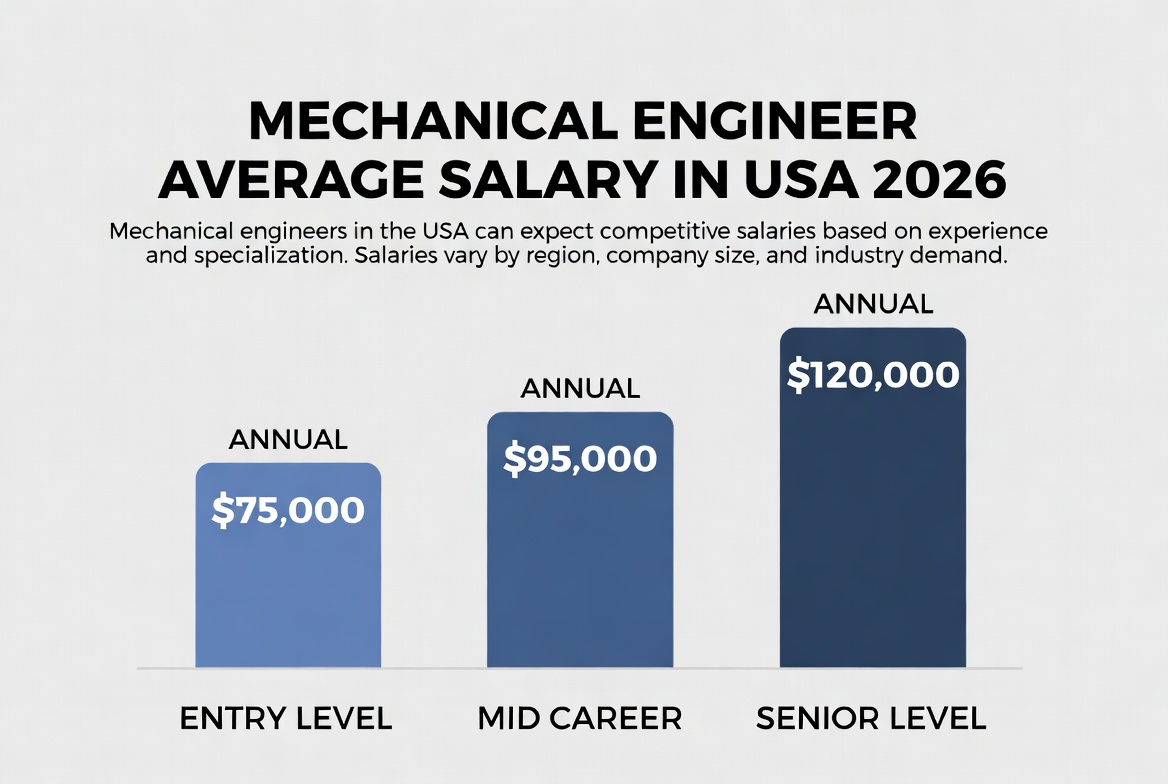
Mechanical engineer salaries in the United States showcase the enduring value and demand for this versatile engineering discipline. As a foundational pillar of innovation across manufacturing, robotics, energy, and aerospace, what is the earning potential for mechanical engineers in 2026? This detailed analysis provides the latest compensation data, geographical breakdowns, and career insights. Whether you are entering the workforce, seeking advancement, or benchmarking industry standards, understanding the financial landscape for mechanical engineers is essential for strategic career planning in today’s technologically driven economy.
What Is the National Average Salary for a Mechanical Engineer in 2026?
How much does a mechanical engineer earn on average across the United States? Based on comprehensive 2026 salary aggregation from industry surveys and employment data, the median annual salary for a Mechanical Engineer is $130,175. This figure represents the central point of the profession’s earnings. What does this translate to in other common pay periods? This annual average breaks down to approximately $65.88 per hour, $10,848 per month, or $2,503 per week for standard full-time employment. For those beginning their careers, entry-level positions typically offer a starting salary around $101,875 per year. Conversely, highly experienced mechanical engineers with specialized expertise or leadership roles can achieve salaries up to $177,880 per year. The difference between the entry-level and senior-level pay scales underscores the significant financial growth available through experience and specialization.
Which States Offer the Highest Salaries for Mechanical Engineers in 2026?
Where are the most financially rewarding opportunities for mechanical engineers located? Compensation varies significantly by state, influenced by local industry presence, cost of living, and demand for technical talent. What are the top 10 highest-paying states for mechanical engineers in 2026?
How much of a geographical pay disparity exists? The data reveals a substantial range, with the highest-paying state (California) offering over $61,000 more than the lowest-paying state (South Dakota). This difference between coastal tech/defense hubs and more agricultural or manufacturing-focused states is a critical consideration for career mobility and negotiation.
What Are the Primary Factors That Determine a Mechanical Engineer’s Salary?
Beyond location, which variables most directly impact compensation? Which factors should professionals focus on to maximize their earning potential?
1. Experience and Career Stage: This is the most significant driver. How fast does salary grow with experience?
-
Entry-Level (0-3 years): $101,875 – $118,000
-
Mid-Career (4-9 years): $118,000 – $145,000
-
Experienced (10-20 years): $145,000 – $165,000
-
Senior/Principal (20+ years): $165,000 – $177,880+
2. Industry Sector: Is it worth targeting specific industries? Sectors like semiconductor capital equipment, oil & gas (upstream), and specialized aerospace/defense typically offer higher base salaries and bonuses compared to roles in traditional industrial manufacturing or HVAC.
3. Advanced Degrees and Certifications: A Master’s degree (M.S. or M.Eng.) can increase starting salaries by 8-15% and is often required for R&D or advanced analysis roles. A Professional Engineer (P.E.) license is highly valuable in public sector, consulting, and regulated industries, commanding a premium.
4. Specialized Technical Skills: Proficiency in high-demand software and methodologies is rewarded. Expertise in Finite Element Analysis (FEA- ANSYS, Abaqus), Computational Fluid Dynamics (CFD), Product Lifecycle Management (PLM – Siemens Teamcenter), and advanced CAD (CATIA, SOLIDWORKS) can significantly boost pay.
5. Job Function and Responsibilities: Roles involving project leadership, direct client management, or ownership of critical design validation (e.g., Design Responsible Engineer) pay more than individual contributor roles focused on a narrow task.
How Does Mechanical Engineer Compensation Compare to Other Engineering Roles?
What is the difference between a mechanical engineer’s salary and that of other common engineering professions? This comparison provides context within the broader tech and industrial landscape.
-
Software Engineer: Average 2026 Salary: ~$135,000. Mechanical engineers in tech hubs or in robotics/AI-integrated roles can rival this, but software roles often have higher ceilings in pure tech companies.
-
Electrical Engineer: Average 2026 Salary: ~$128,000. Very comparable, with variations depending on industry (e.g., power systems vs. consumer electronics).
-
Aerospace Engineer: Average 2026 Salary: $125,361. Mechanical engineers in the aerospace sector often earn comparable or higher wages, especially in structural or propulsion roles.
-
Civil Engineer: Average 2026 Salary: ~$95,000. Mechanical engineers generally earn a notable premium, reflecting different industry profit margins and demand cycles.
-
Project Engineer (Mechanical): Average 2026 Salary: $113,500. This is often a mid-career role blending technical and management duties, sometimes with a slightly lower base but potential for project bonuses.
The data indicates that mechanical engineer salaries remain highly competitive, often exceeding the broader engineering median due to the field’s application across high-value industries.
What Is the Future Outlook and Salary Growth Trajectory for 2026 and Beyond?
How fast is the field evolving, and what should engineers expect for future earnings? The demand for mechanical engineers is projected to remain steady with growth concentrated in high-tech areas. The integration of digital twins, additive manufacturing (3D printing), robotics and automation, and sustainable energy systems is creating premium roles. Salaries in these emerging specializations are growing faster than the field’s average. The best way to ensure strong salary growth is to combine core mechanical fundamentals with expertise in mechatronics, data analytics for predictive maintenance, or advanced materials science.
How Can Mechanical Engineers Maximize Their Salary in the Current Market?
What are the top strategies for a mechanical engineer to increase their compensation in 2026?
1. Develop Hybrid Skills: The most sought-after (and highest-paid) mechanical engineers are those who can bridge gaps. Learn basic Python for automation and data analysis, or understand IoT sensor integration to work on smart products.
2. Target High-Value Industries: Be willing to move into adjacent, high-margin sectors. Mechanical engineers in pharmaceutical tooling, micro-electronics packaging, or renewable energy storage systems often see pay above the median.
3. Pursue Strategic Certification: Beyond the P.E., consider certifications like Certified SolidWorks Professional (CSWP), Six Sigma Black Belt, or PMP (Project Management Professional) to validate specialized skills that command higher pay.
4. Master Negotiation: How should you approach a salary discussion? Always research the specific company’s compensation band using sites like Levels.fyi and Glassdoor. Articulate your value based on quantifiable achievements (e.g., “Reduced product weight by 15%,” “Cut testing time by 30 hours per cycle”).
5. Consider Contract or Consulting Work: For experienced engineers, high-level consulting on a project basis can yield hourly rates significantly exceeding the salaried average, though it lacks traditional benefits and job security.
Frequently Asked Questions (FAQs)
1. What is a realistic starting salary for a mechanical engineer graduate in 2026?
A realistic average starting salary for a mechanical engineering graduate with a Bachelor’s degree in 2026 is $101,875. This can be higher (often $110,000+) for graduates from top-tier programs, those with relevant co-op/internship experience, or those entering high-paying industries like tech or oil & gas in strategic locations.
2. Do mechanical engineers get paid more than electricians or machinists?
How much more? Yes, significantly. Due to the required four-year engineering degree and design-level responsibility, mechanical engineers have a higher earning ceiling. While a skilled master electrician or CNC programmer can earn a strong wage ($80,000 – $100,000), the median for mechanical engineers is over $130,000, with a much higher ceiling for management and specialized roles.
3. What is the most lucrative industry for a mechanical engineer?
As of 2026, the most lucrative industries tend to be semiconductor equipment manufacturing, specialized aerospace/defence contractors, oil & gas exploration, and certain roles within big tech companies developing hardware (e.g., consumer electronics, data center cooling, robotics). These sectors offer high base salaries and often substantial bonuses or stock options.
4. Is a Master’s degree worth it for a mechanical engineer’s salary?
Should you invest in an advanced degree? For many, yes. A Master’s degree can accelerate promotion to senior technical individual contributor or R&D roles, which have higher pay bands. It can add $10,000-$20,000 to a starting salary and is often a prerequisite for leadership in technical research. The pros include higher pay and more interesting work; the cons are the cost of the degree and 1-2 years of lost full-time earnings.
5. How does company size affect a mechanical engineer’s salary?
Larger corporations (Fortune 500 companies, major defense contractors) often offer higher base salaries, better benefits, and structured bonus plans. However, smaller companies or startups may offer lower base pay but compensate with equity (stock options), which can have high upside potential, and often provide broader responsibility and faster career growth.
6. What is the salary potential for a mechanical engineer who becomes a manager?
Moving into engineering management (e.g., Engineering Manager, Director of Engineering) represents a major salary jump. While a senior individual contributor might cap around $170,000-$180,000, engineering managers can earn $180,000 to $250,000+, with compensation increasingly tied to team performance and project outcomes.
Disclaimer: The salary data, figures, and trends presented in this article are synthesized from publicly available sources, job market surveys, and aggregated reports for the year 2026. They are intended for informational and career guidance purposes only. Actual individual salaries will vary based on specific employer, qualifications, negotiation outcomes, geographic micro-markets, and prevailing economic conditions. This information does not constitute a guarantee or promise of specific earnings.
Keywords: mechanical engineer salary, average engineer salary 2026, mechanical engineering jobs, entry-level mechanical engineer, senior mechanical engineer salary, manufacturing engineer salary, design engineer, project engineer, Professional Engineer license, highest paying engineering states